Farhelm GPUI migration · 2026-11-14
Milestone M1: foundations
TL;DR: The foundations, the agent test stack and a thin first slice of the new app are on main. A fresh review of the whole new GUI found nothing off the rails and growth proportionate to what landed; it found the foundations shaped around their one first user (sessions), so a short list gets fixed before the parallel area work starts. Nothing here needs an answer from you; one old question is still open at the end.
What M1 delivered
- The old browser UI, its WebAssembly build and Playwright are gone; the helm talks to the GUI over one ordered channel that resets the whole window on any break.
- The new app's app-wide foundations: keyboard focus rules, overlays (menus, dialogs, tooltips), one way to ask a question, the theme from today's stylesheet, keyboard actions, the running-row pulse clock, drafts for edits, hidden-character escaping for host text.
- The test stack: agents launch the real app (Linux headless and the test Mac), read the screen, click, type, read the terminal and take screenshots; a screenshot batch; an end-to-end smoke test.
- The first slice working end to end: the session list, the row menu, Delete with its confirmation, Rename, and the selected session's terminal attached, taking input and showing output.
Screenshots: the new app beside the old one
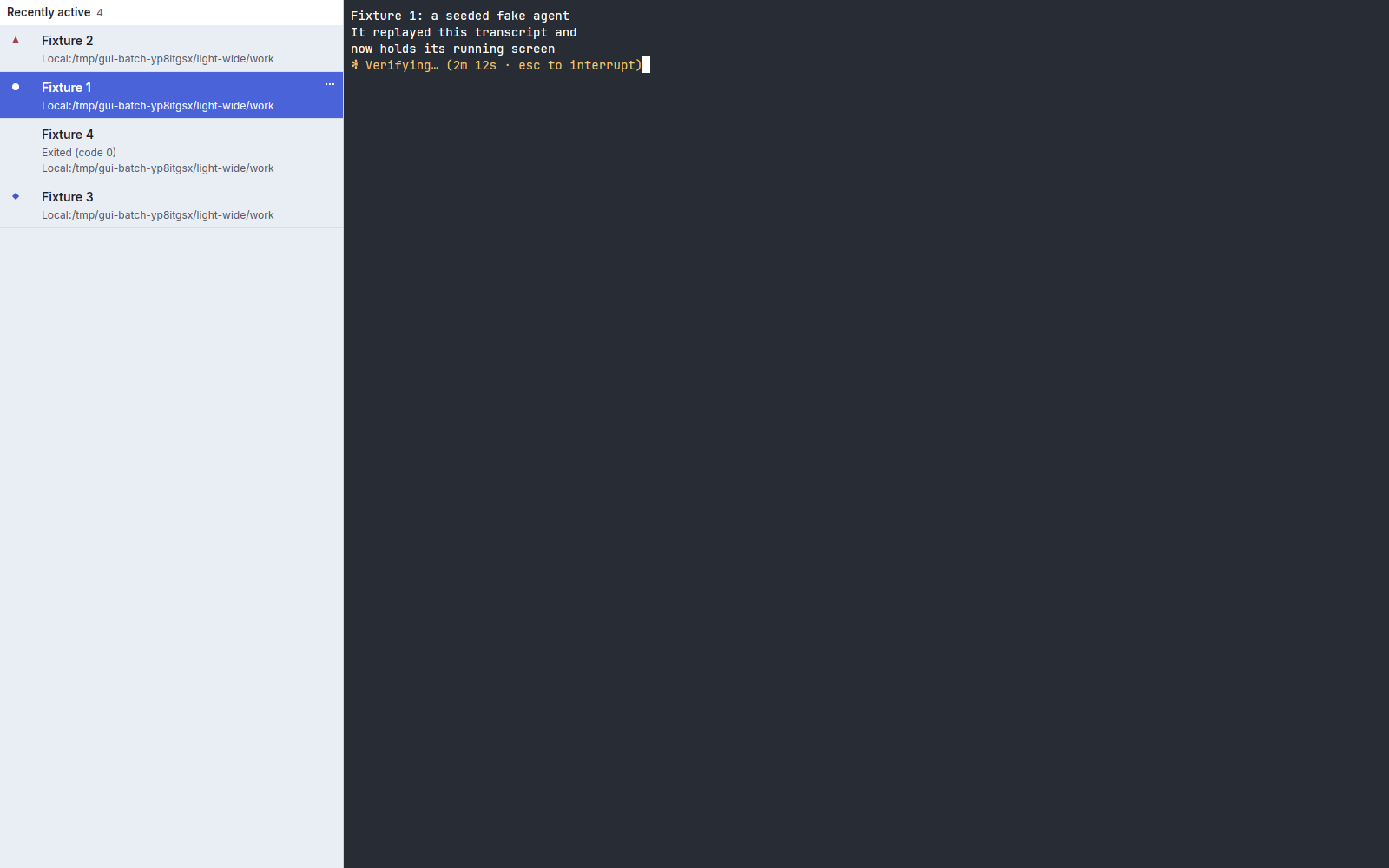
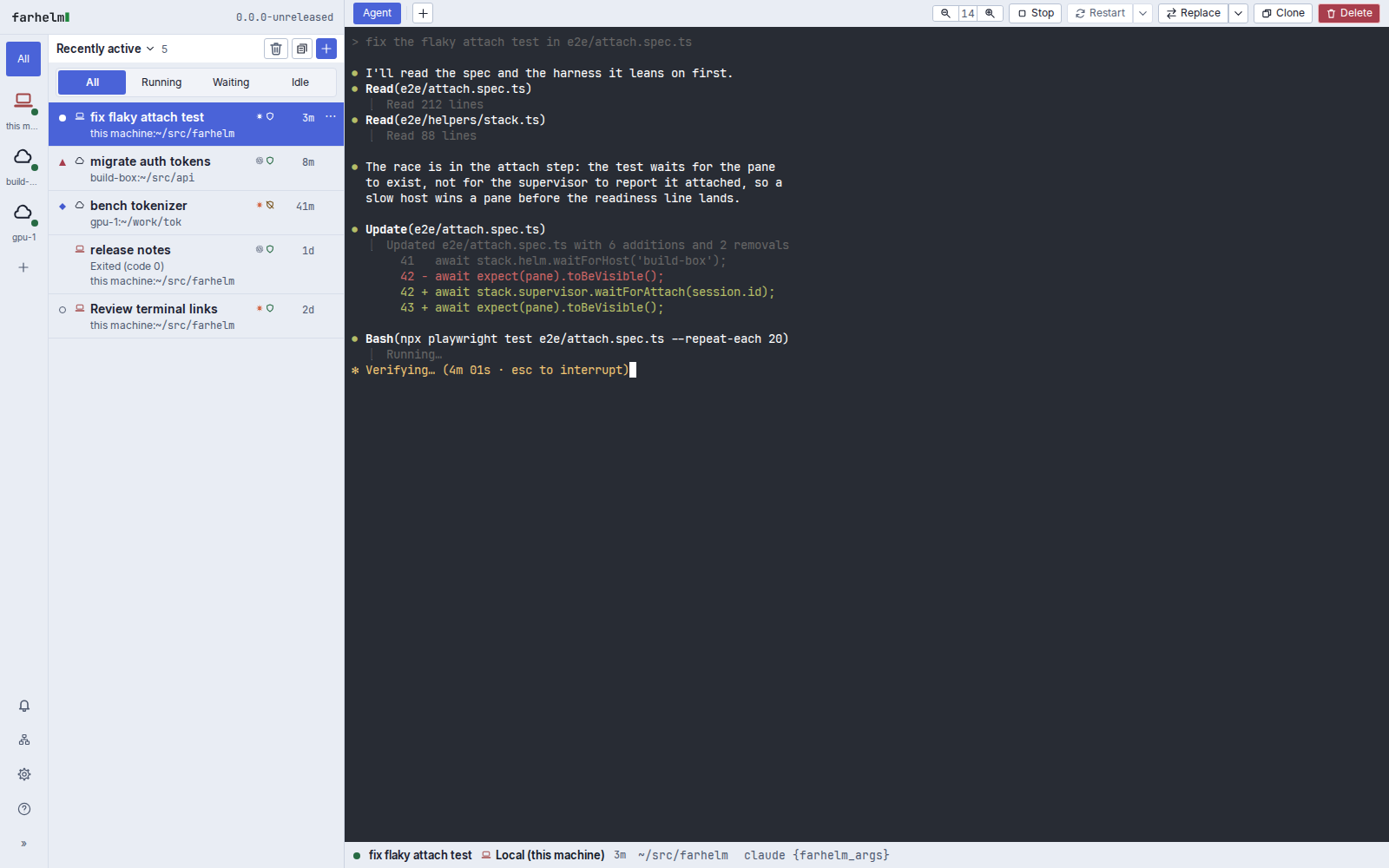
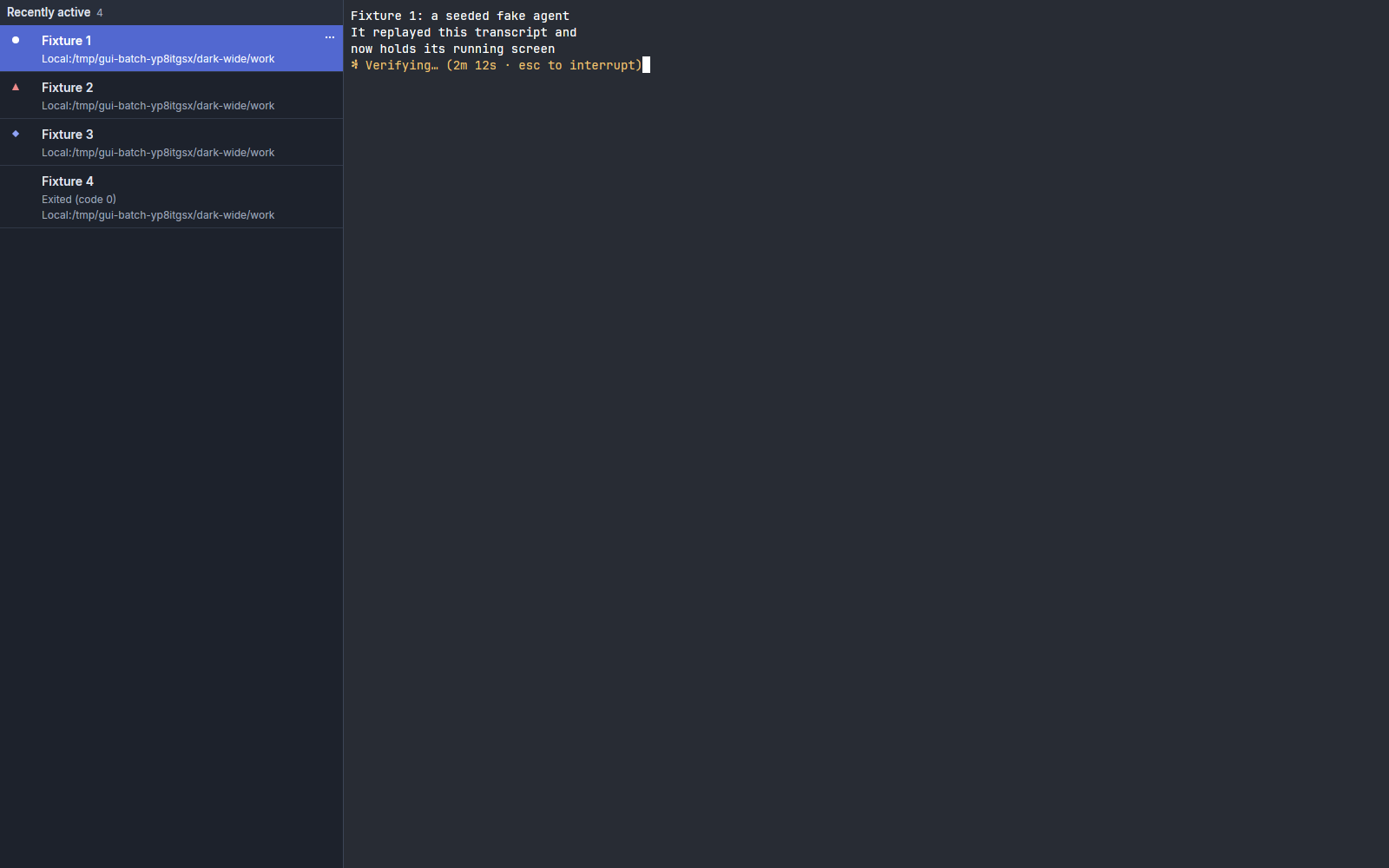
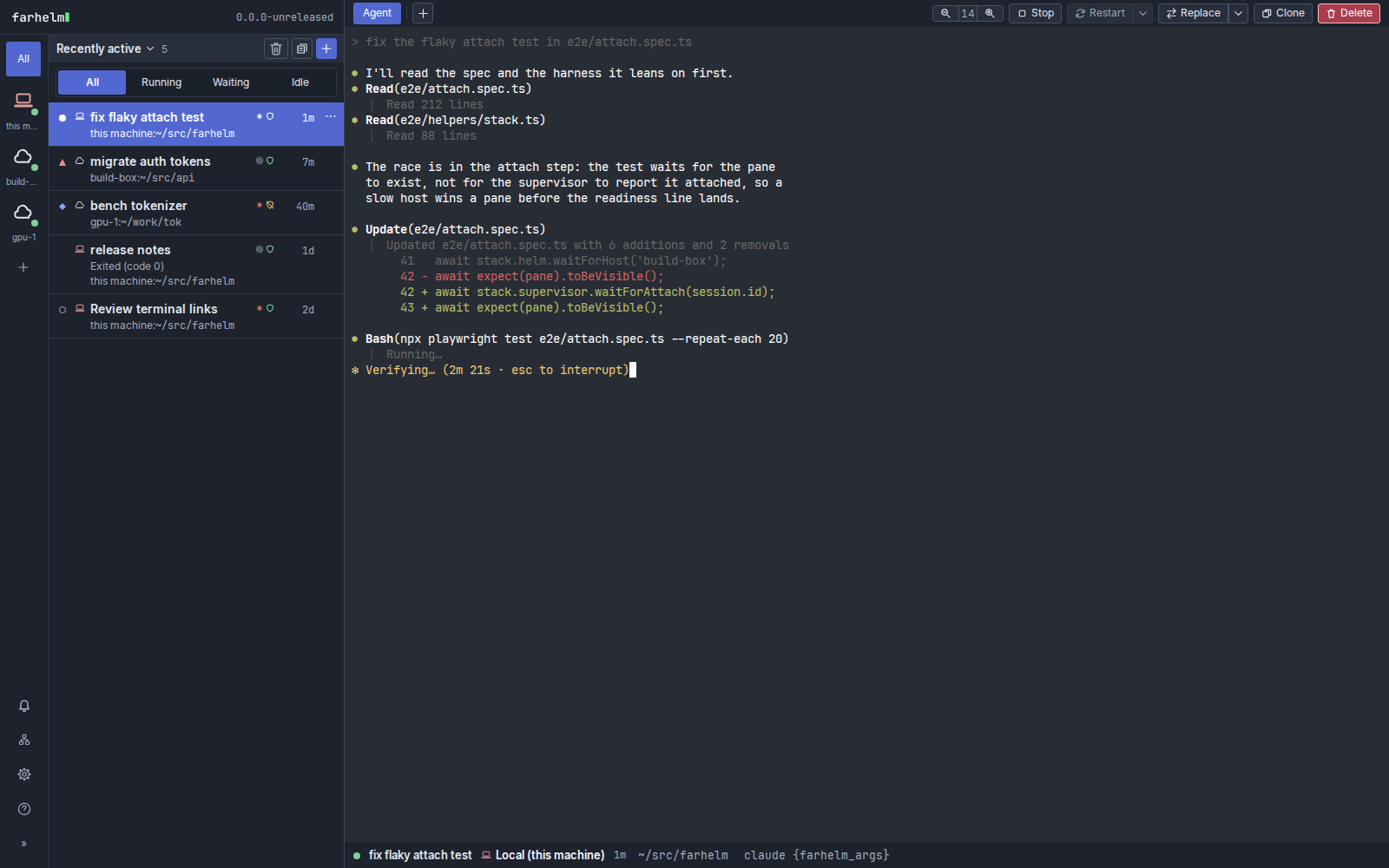
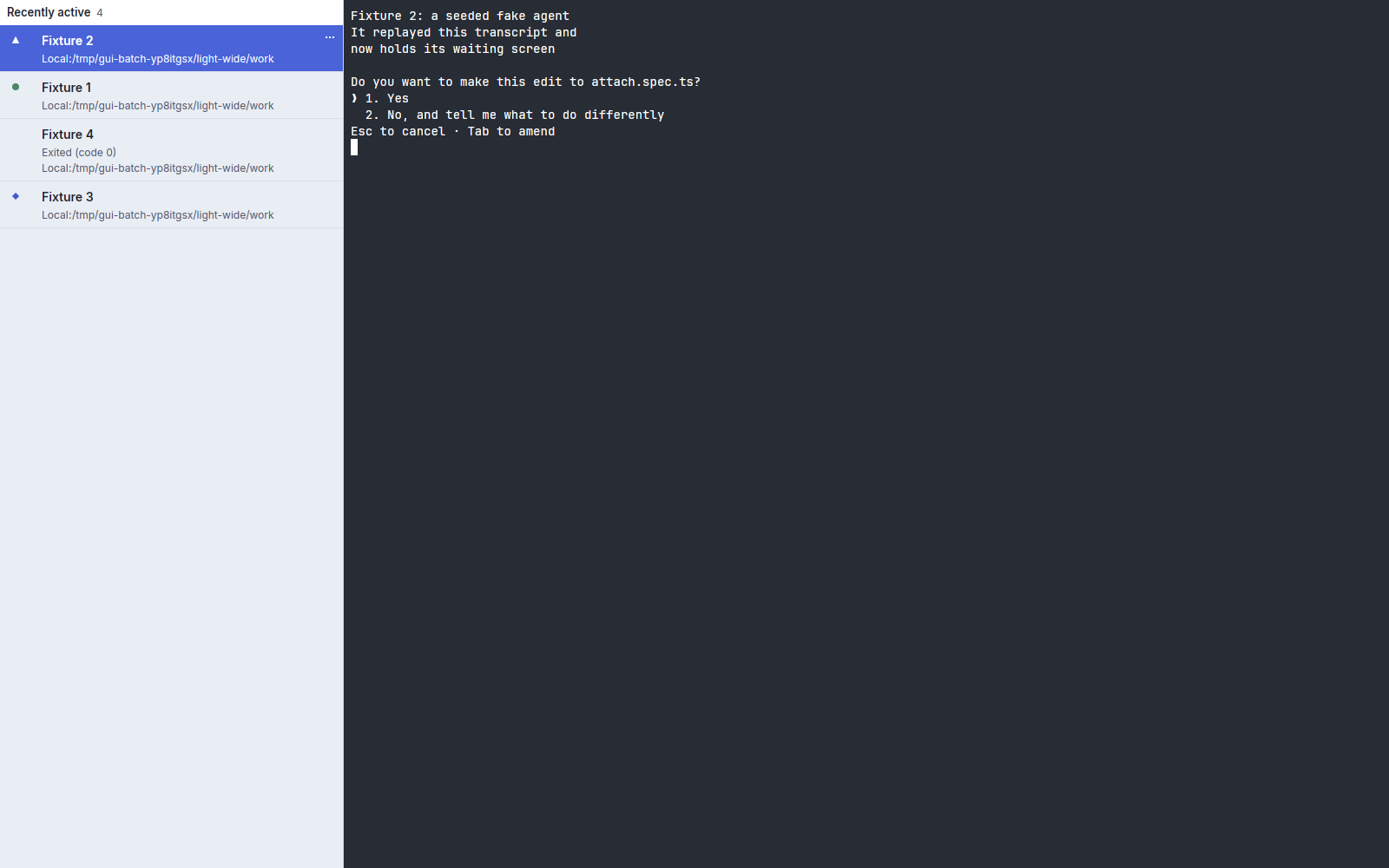
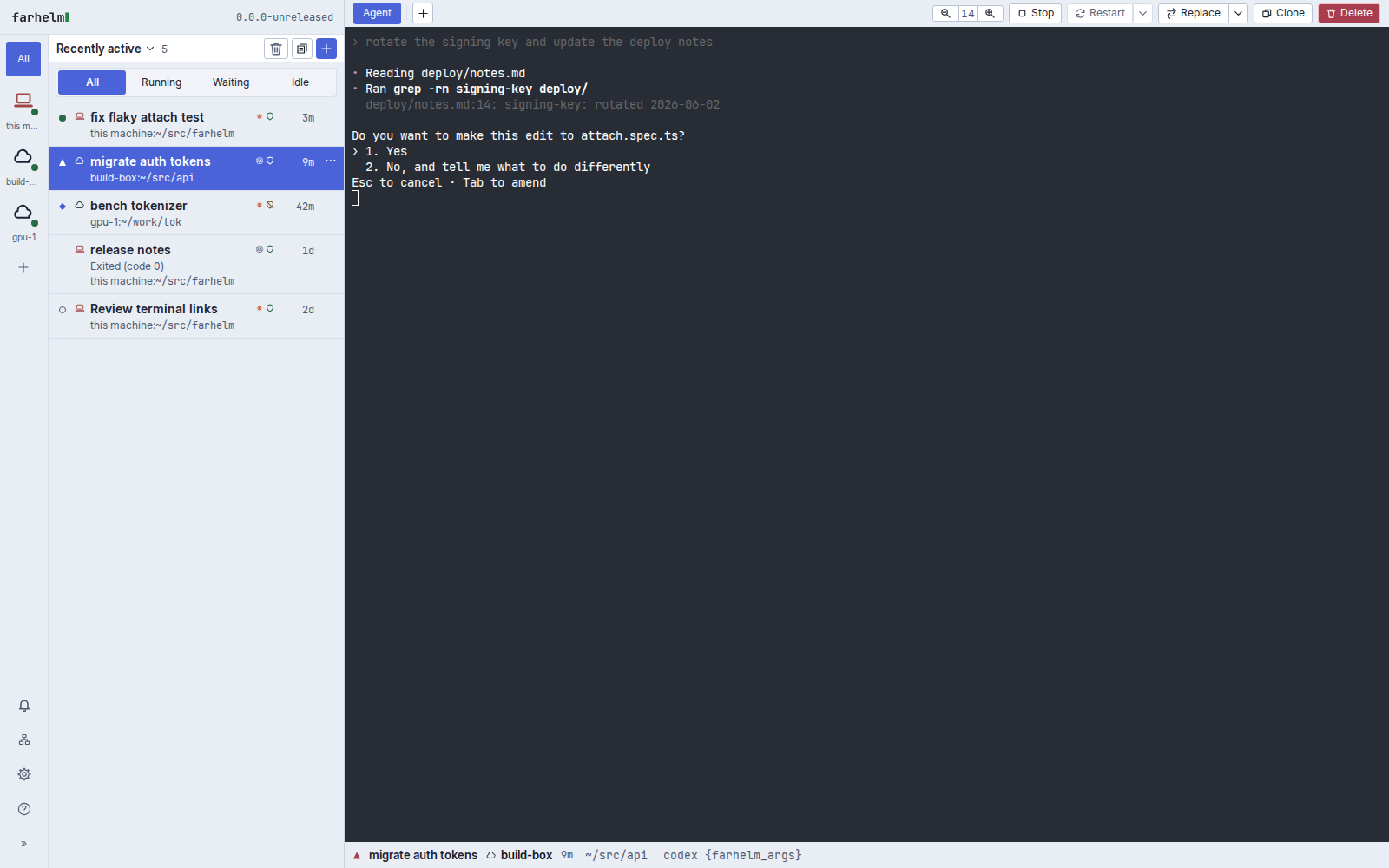
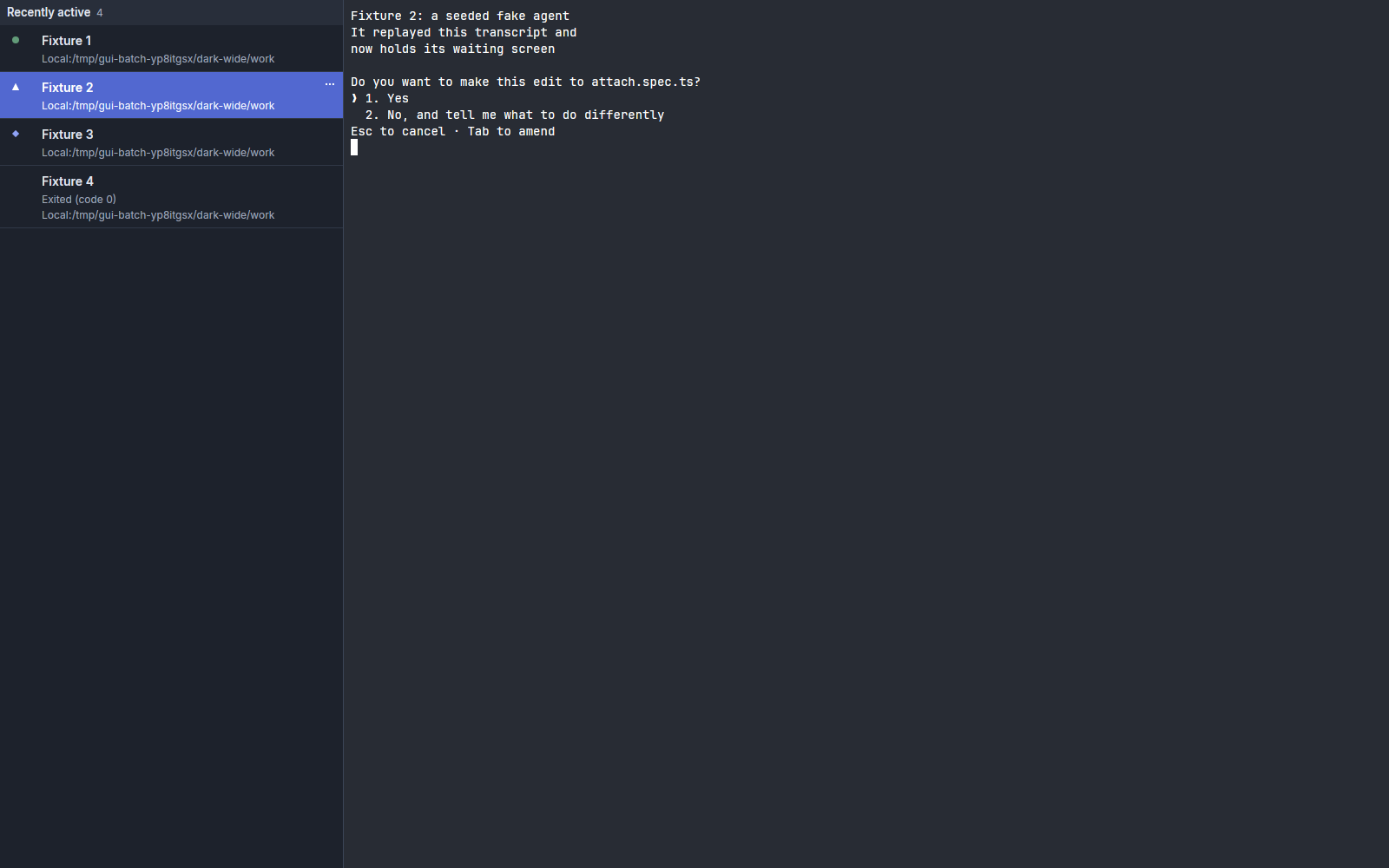
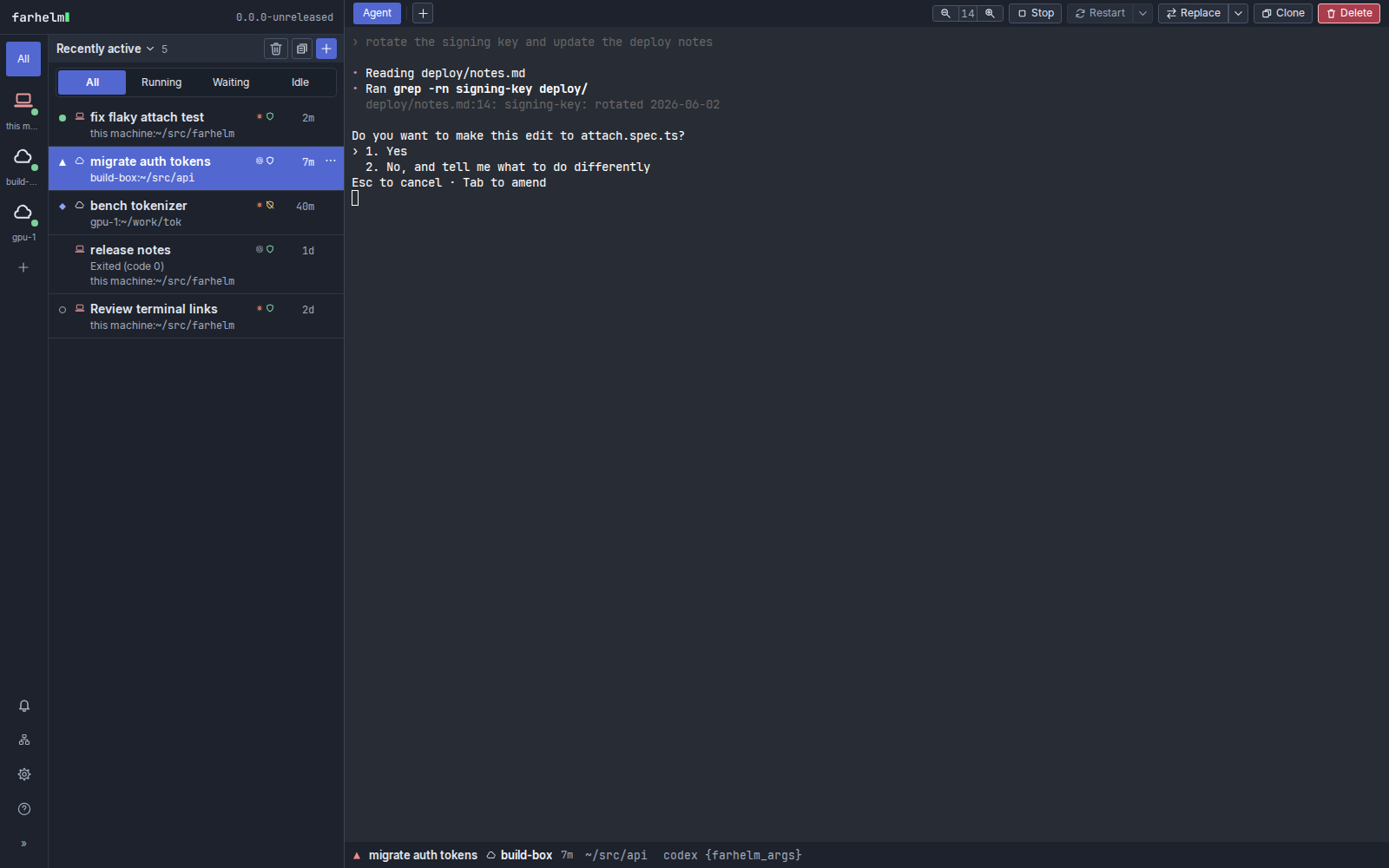
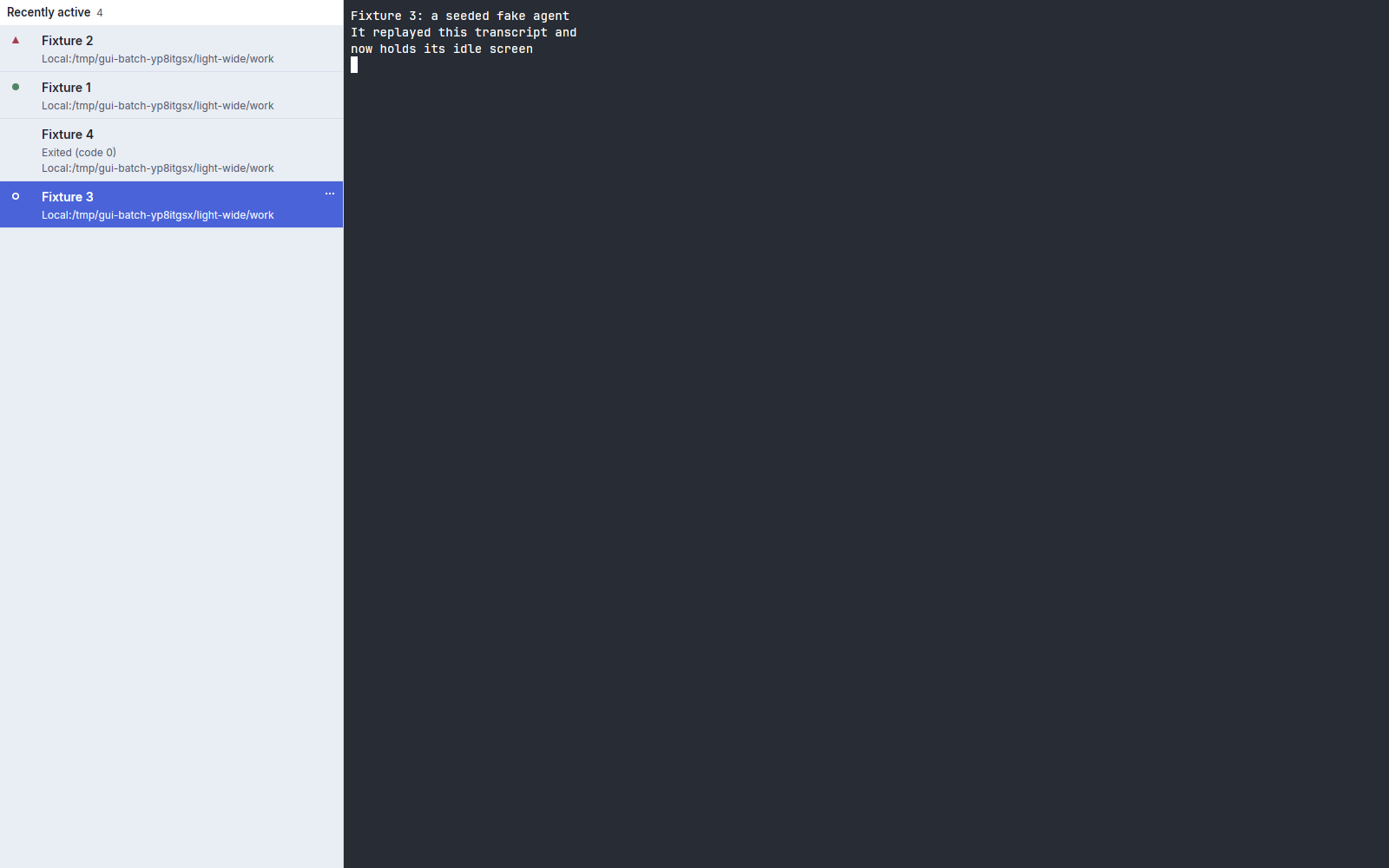
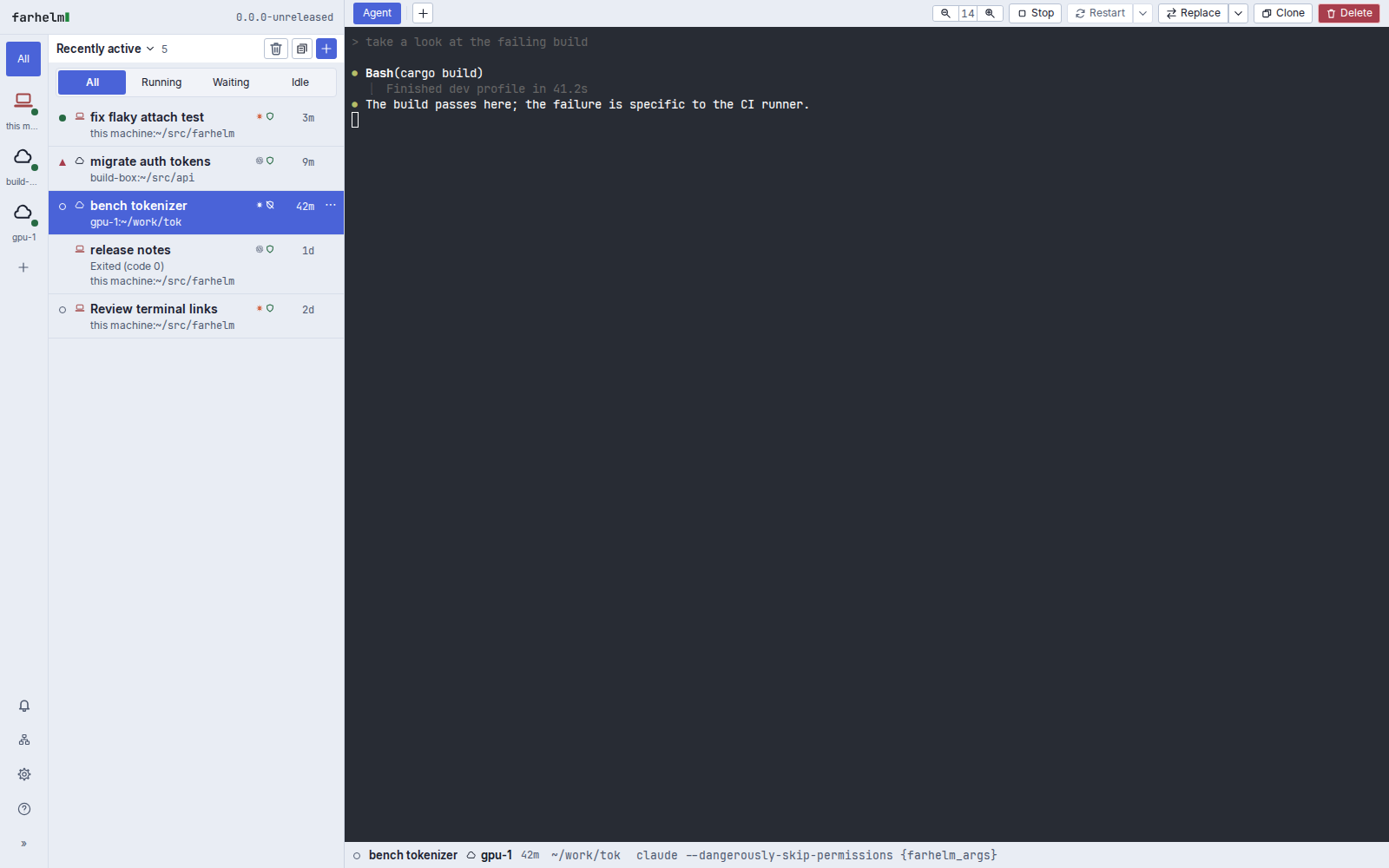
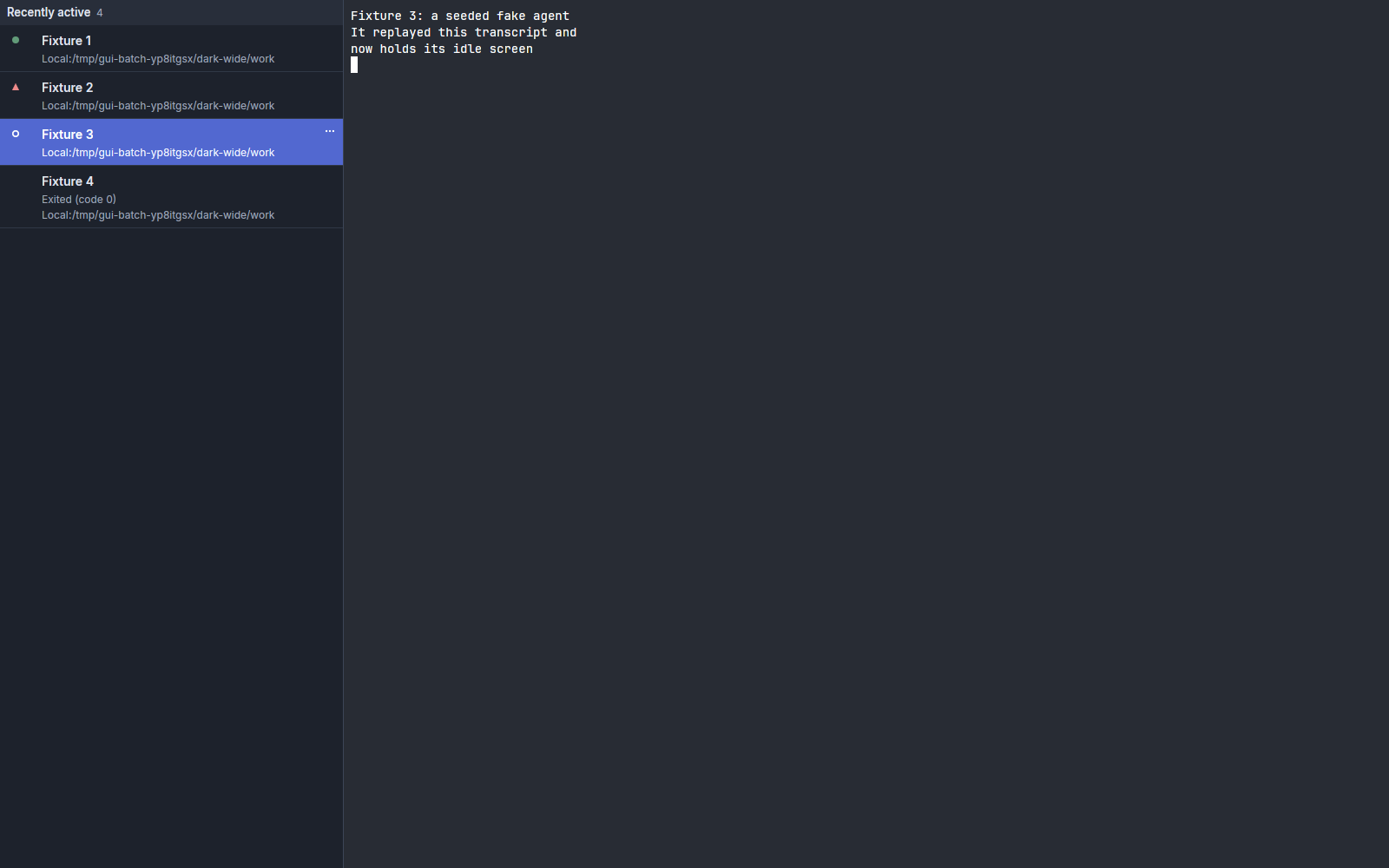
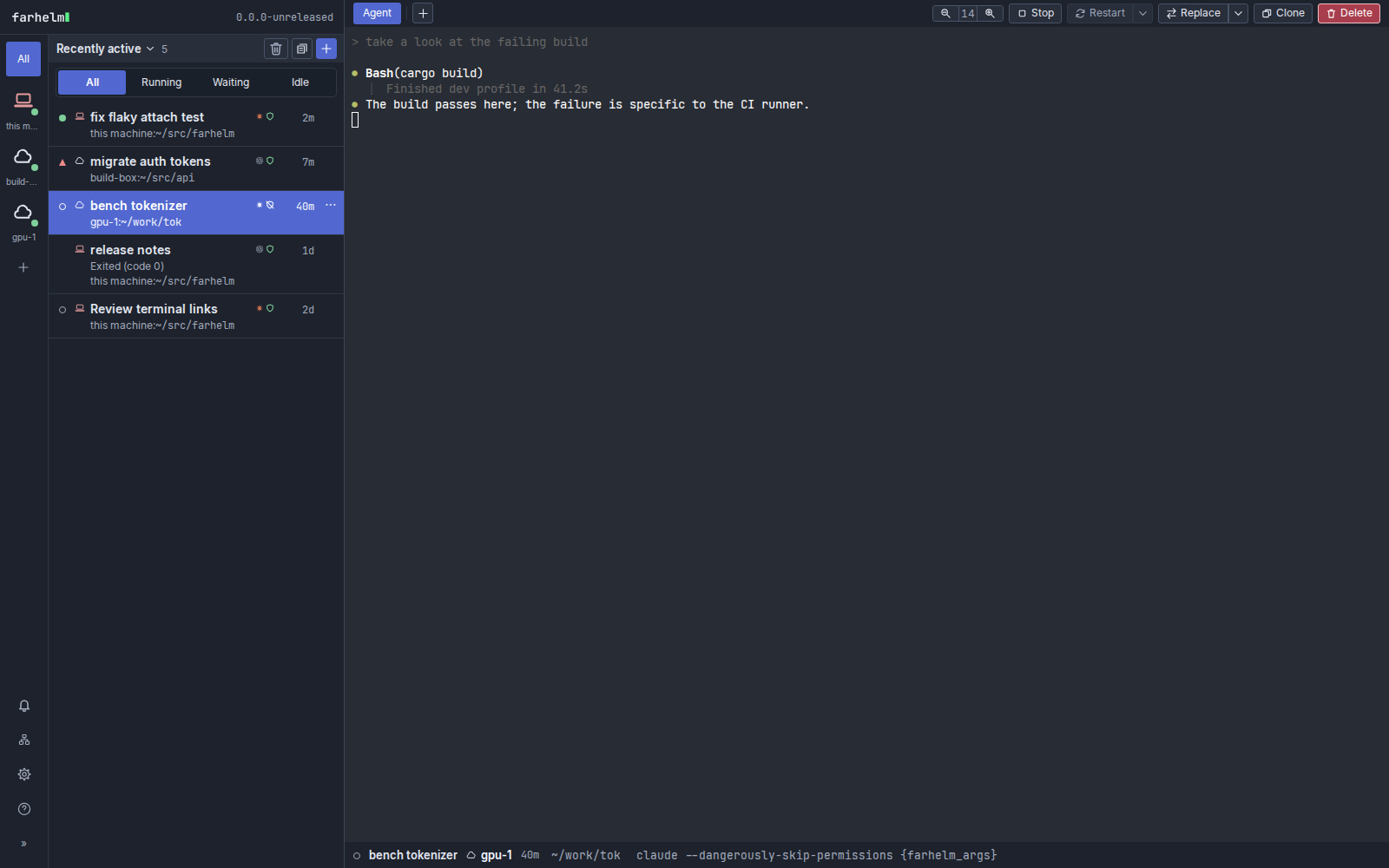
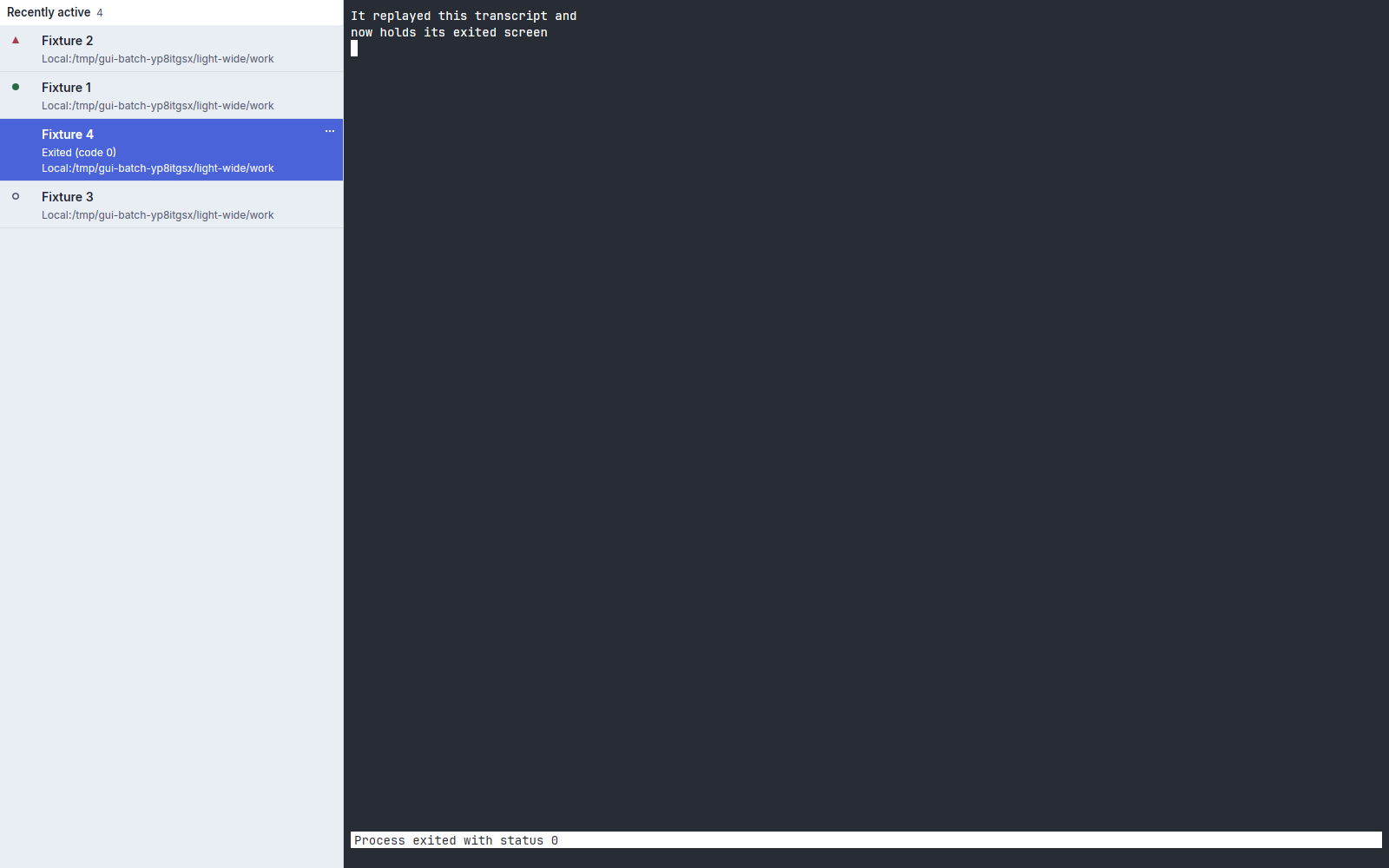
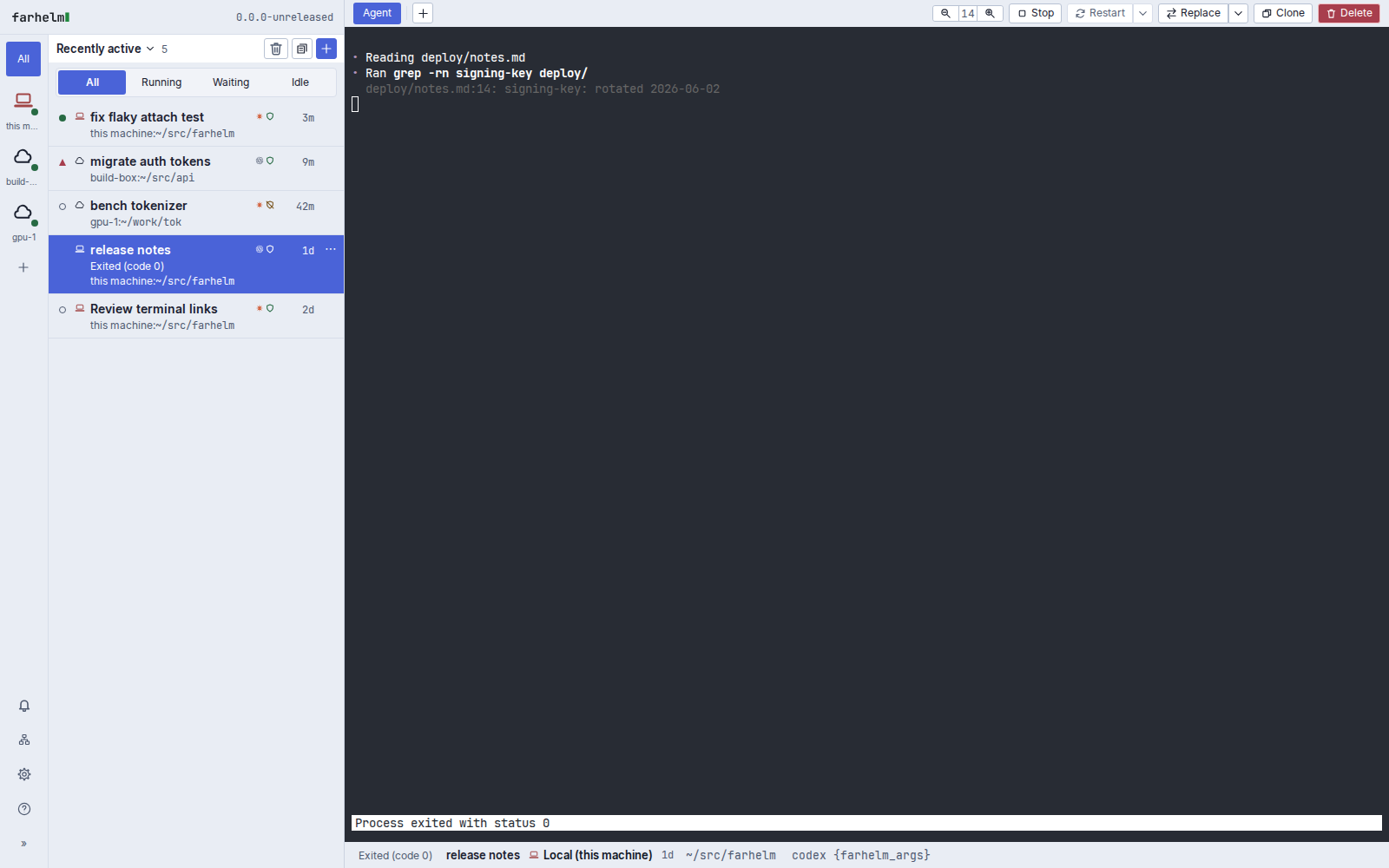
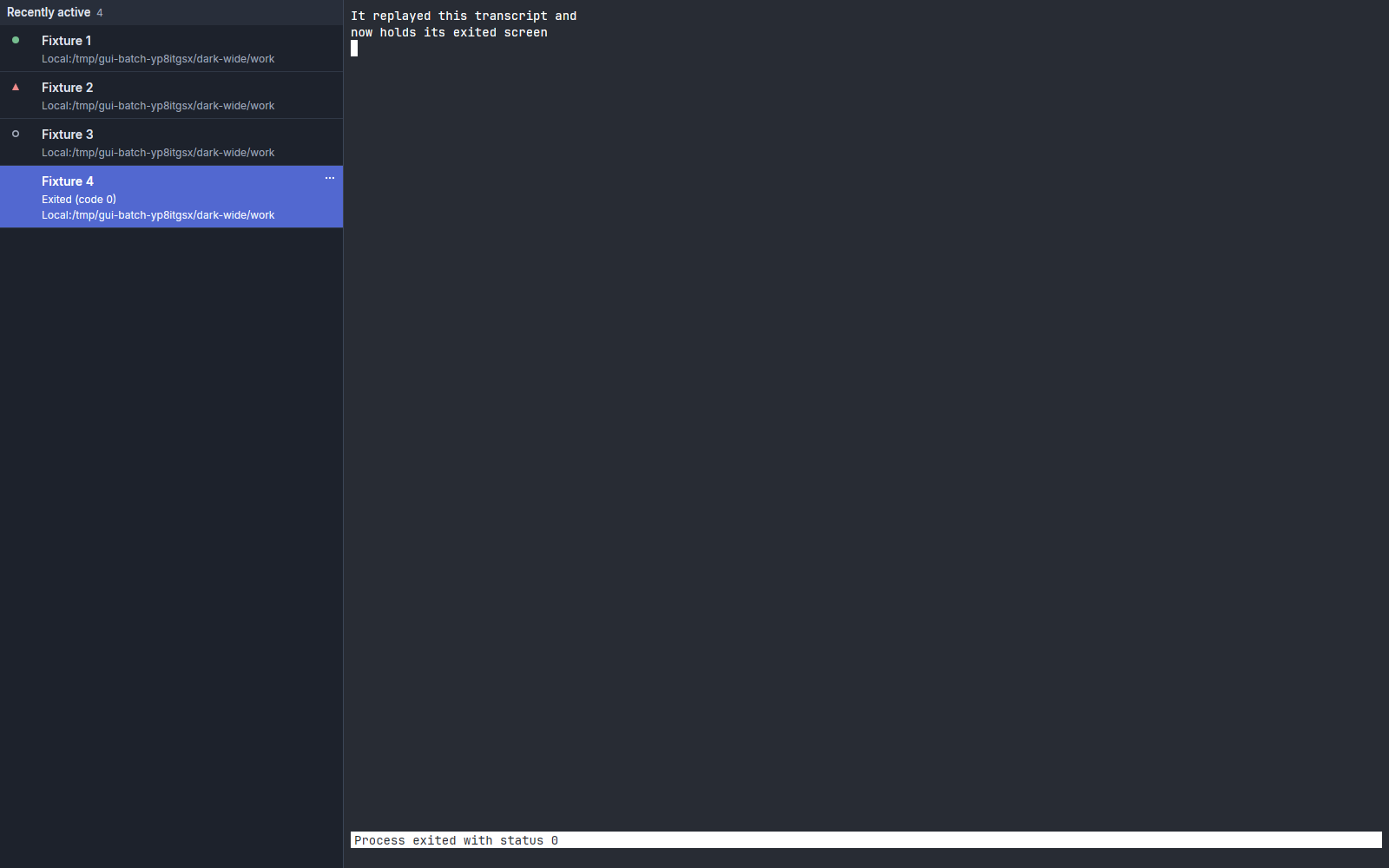
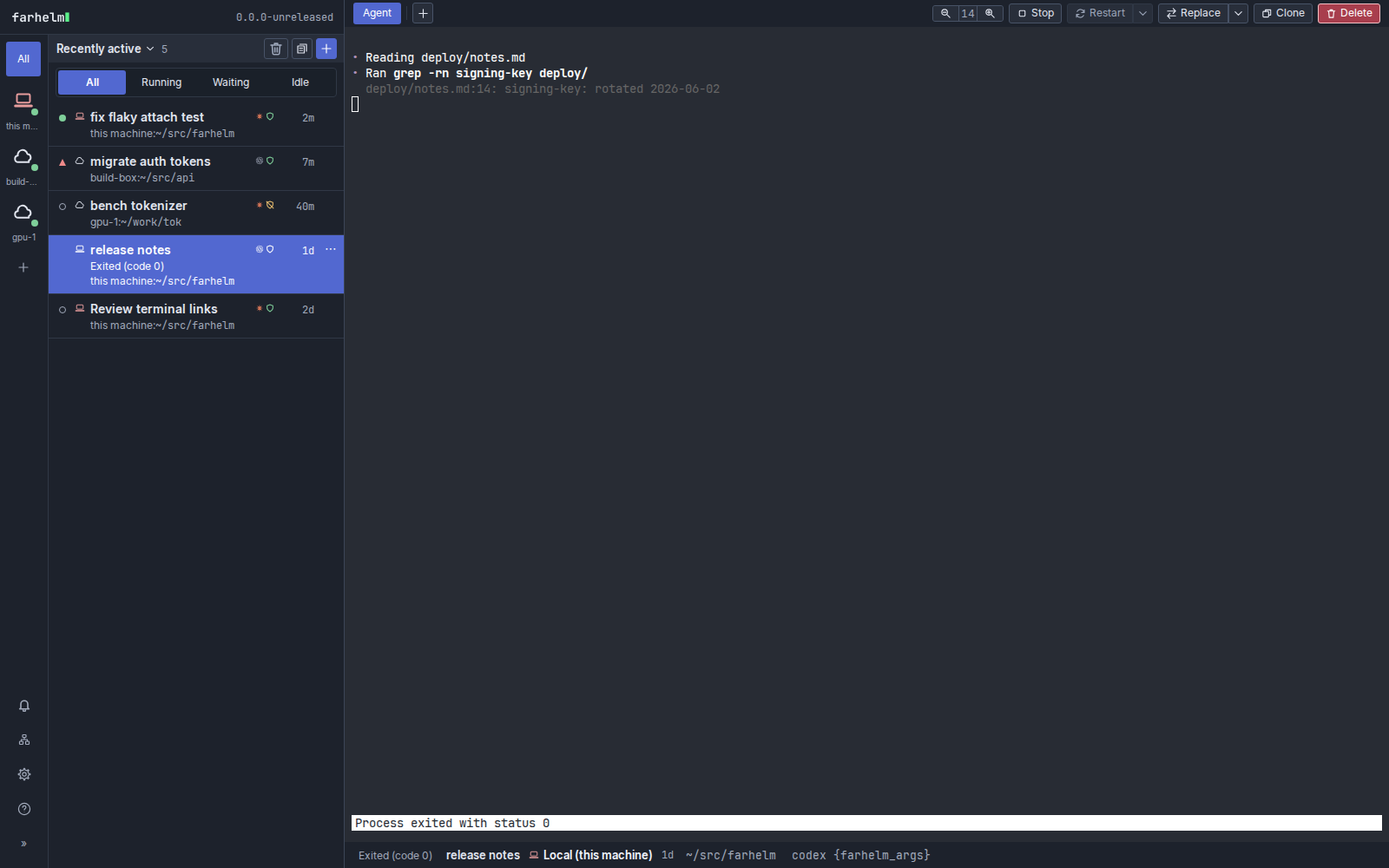
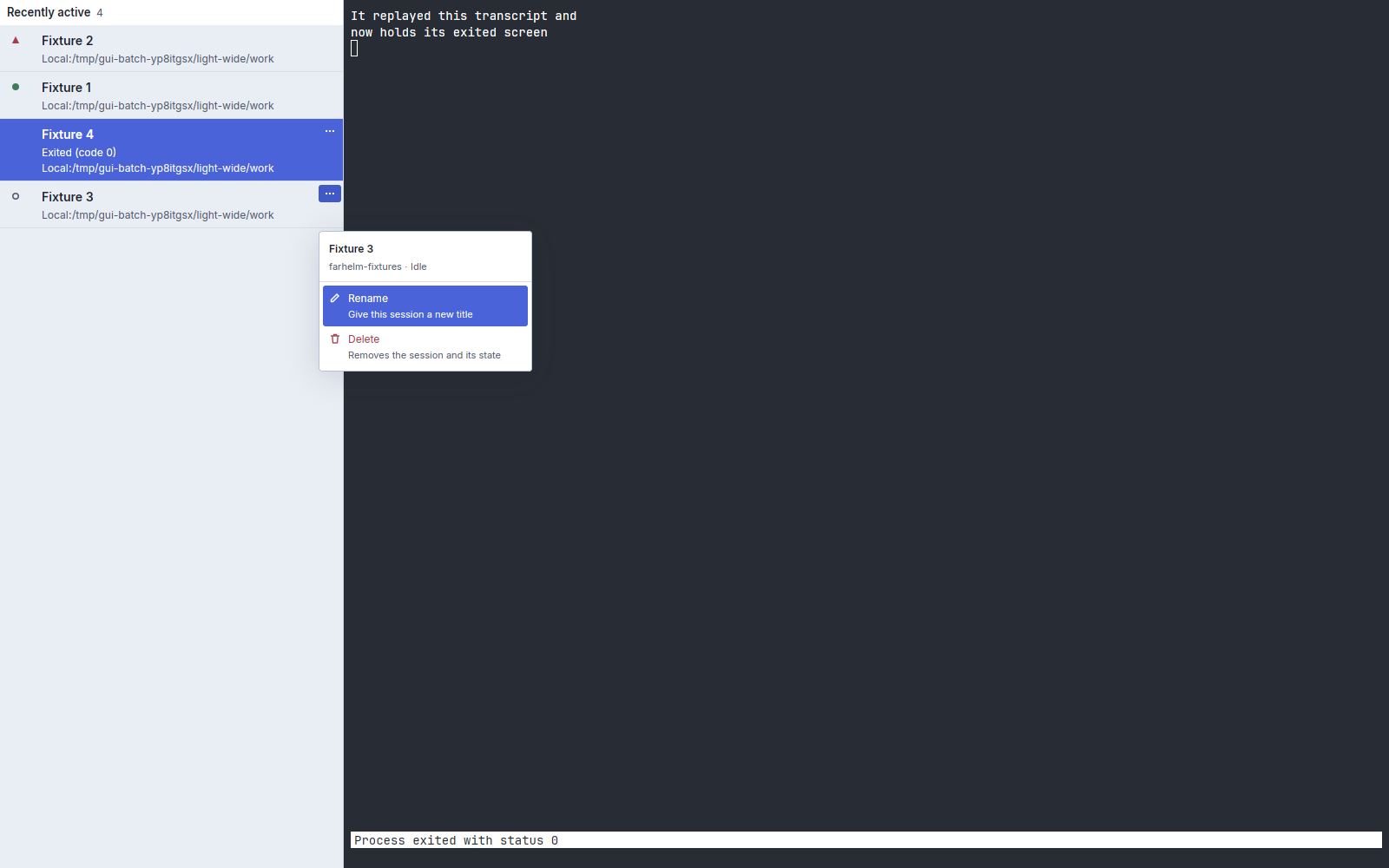
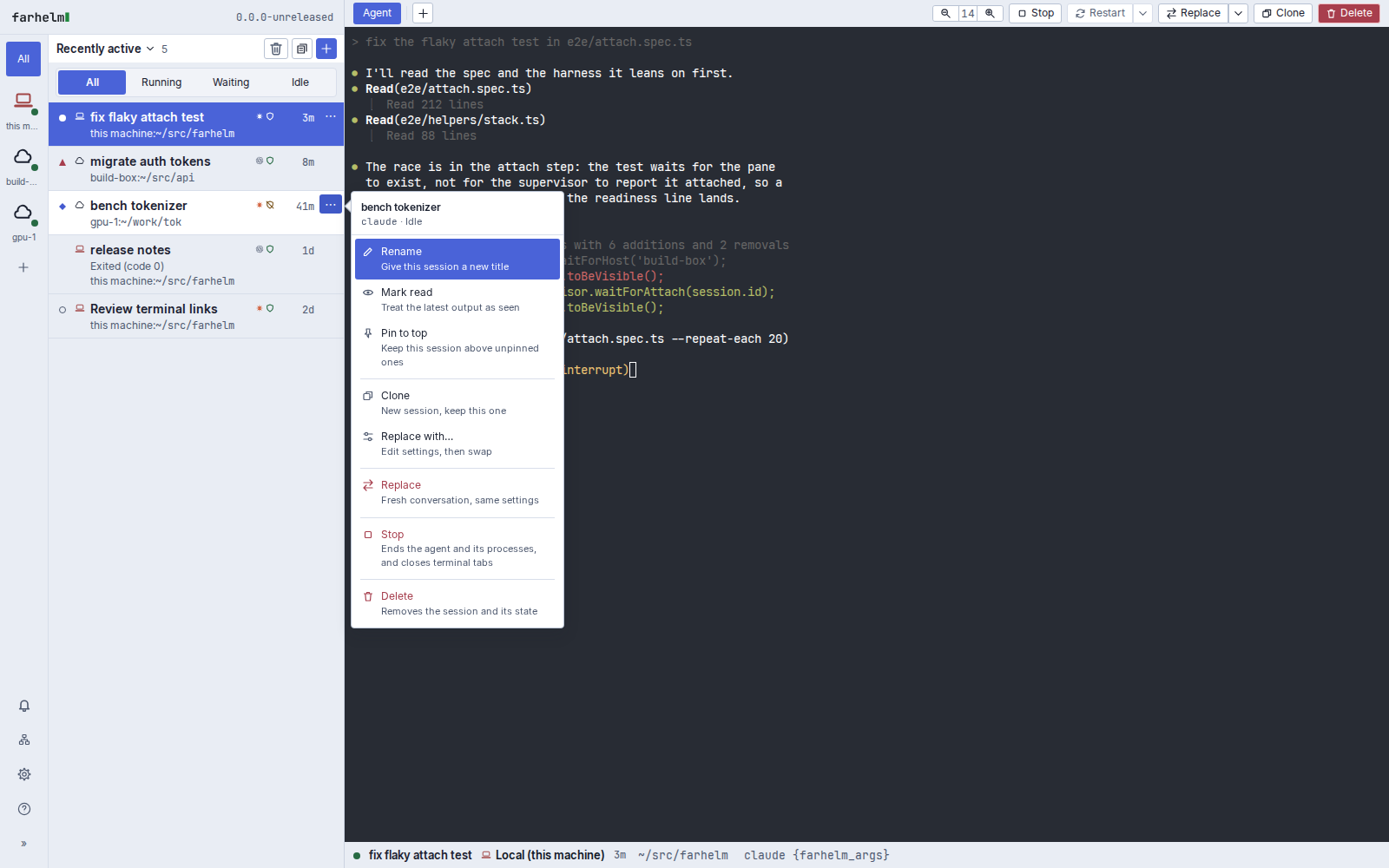
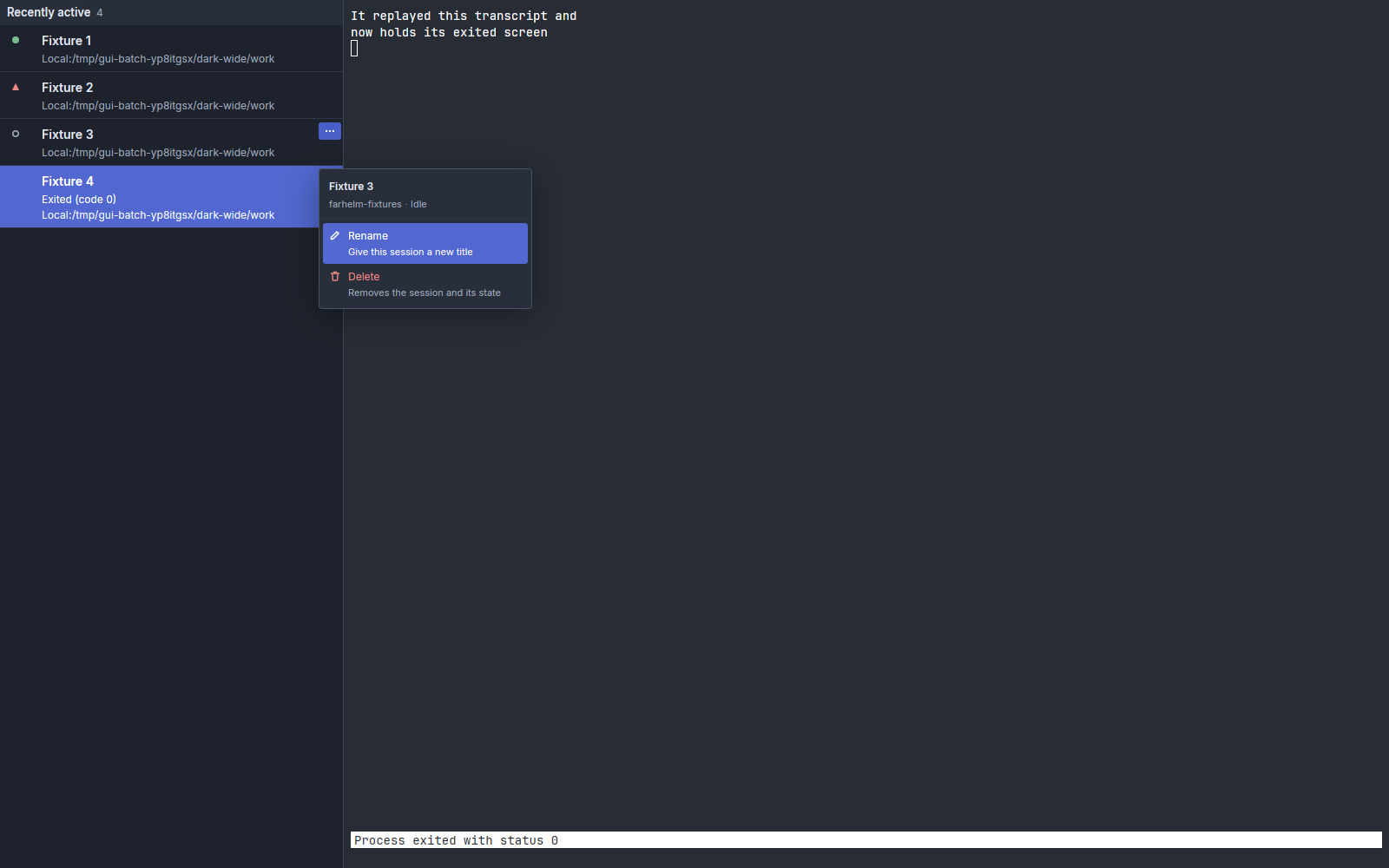
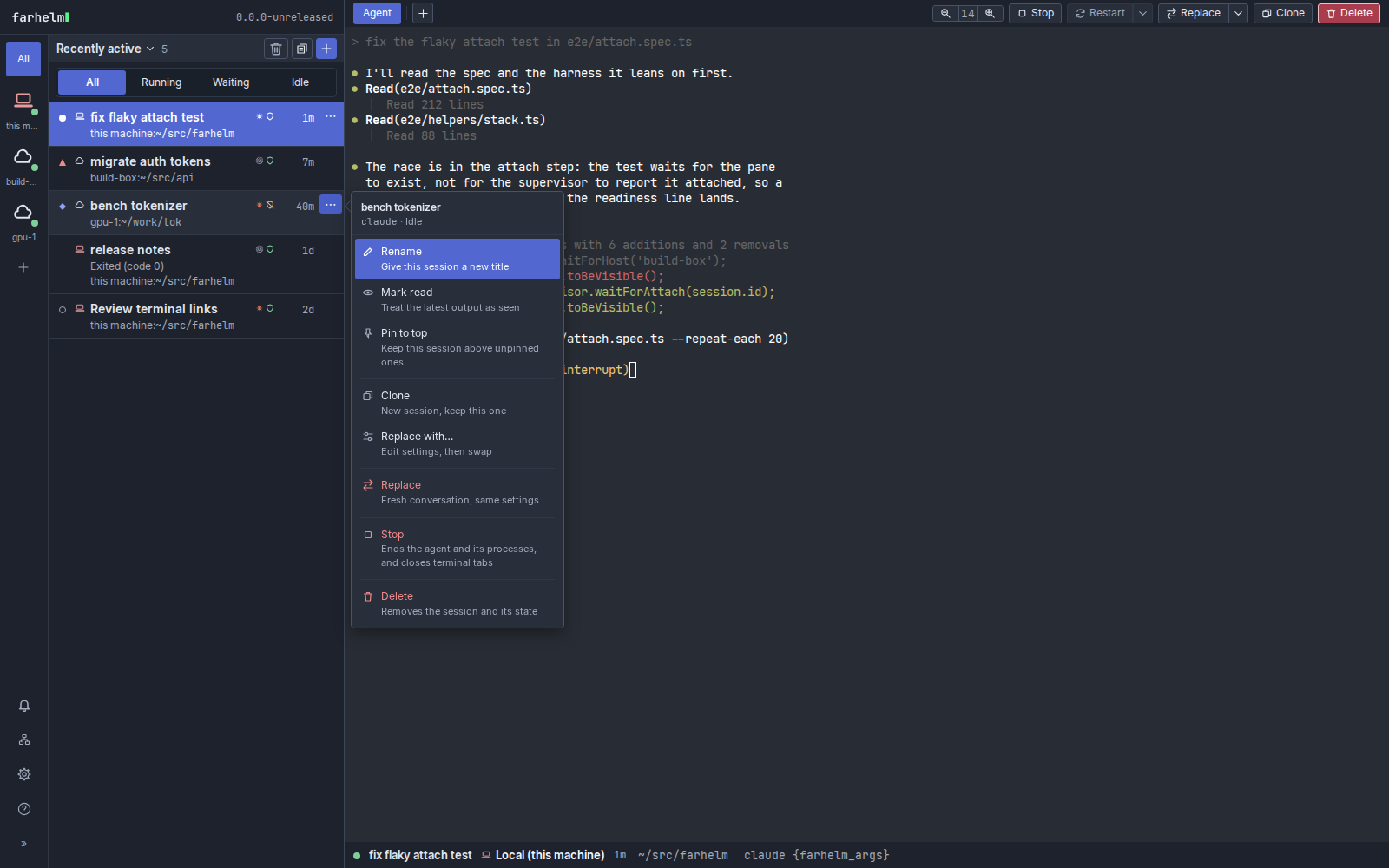
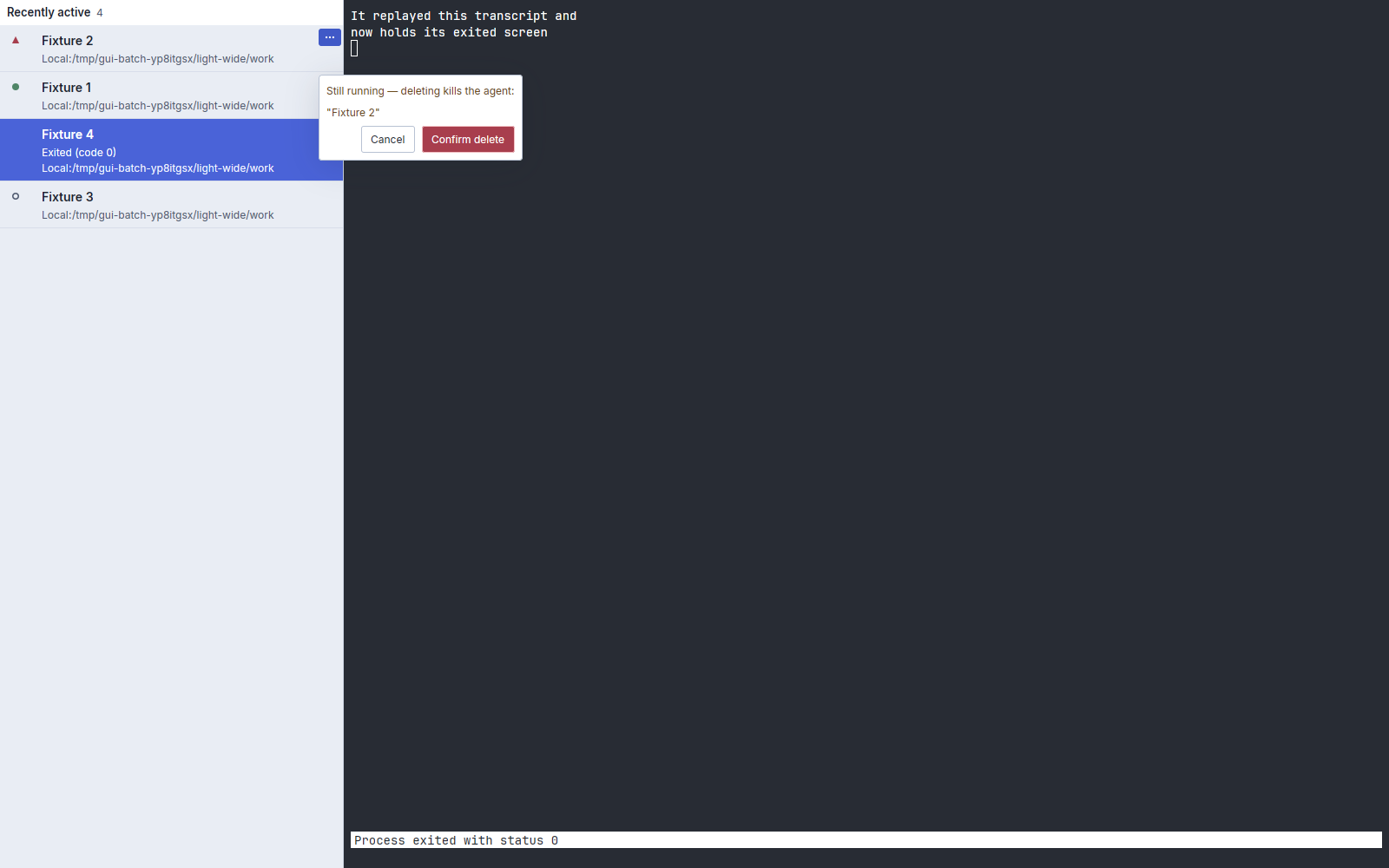
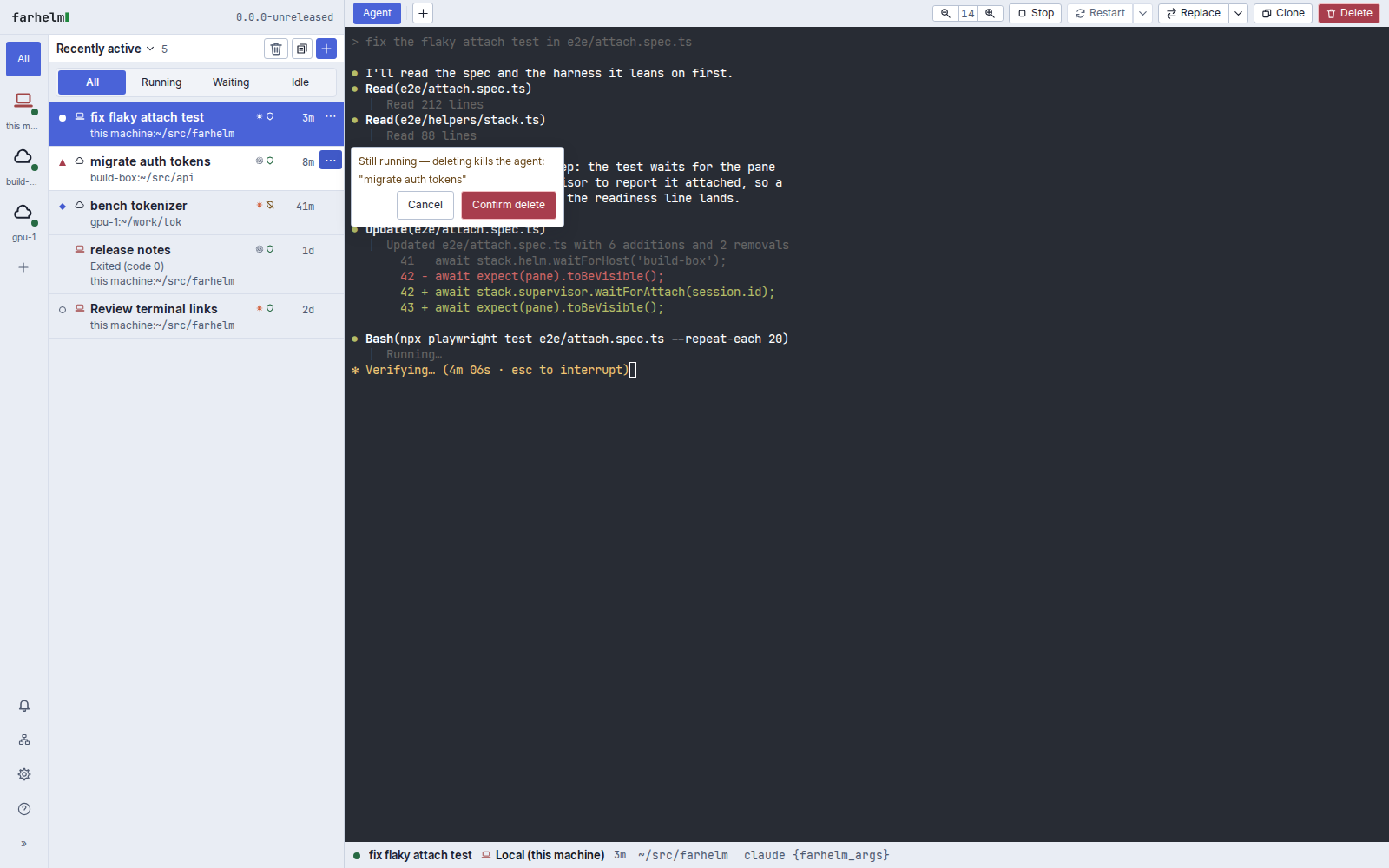
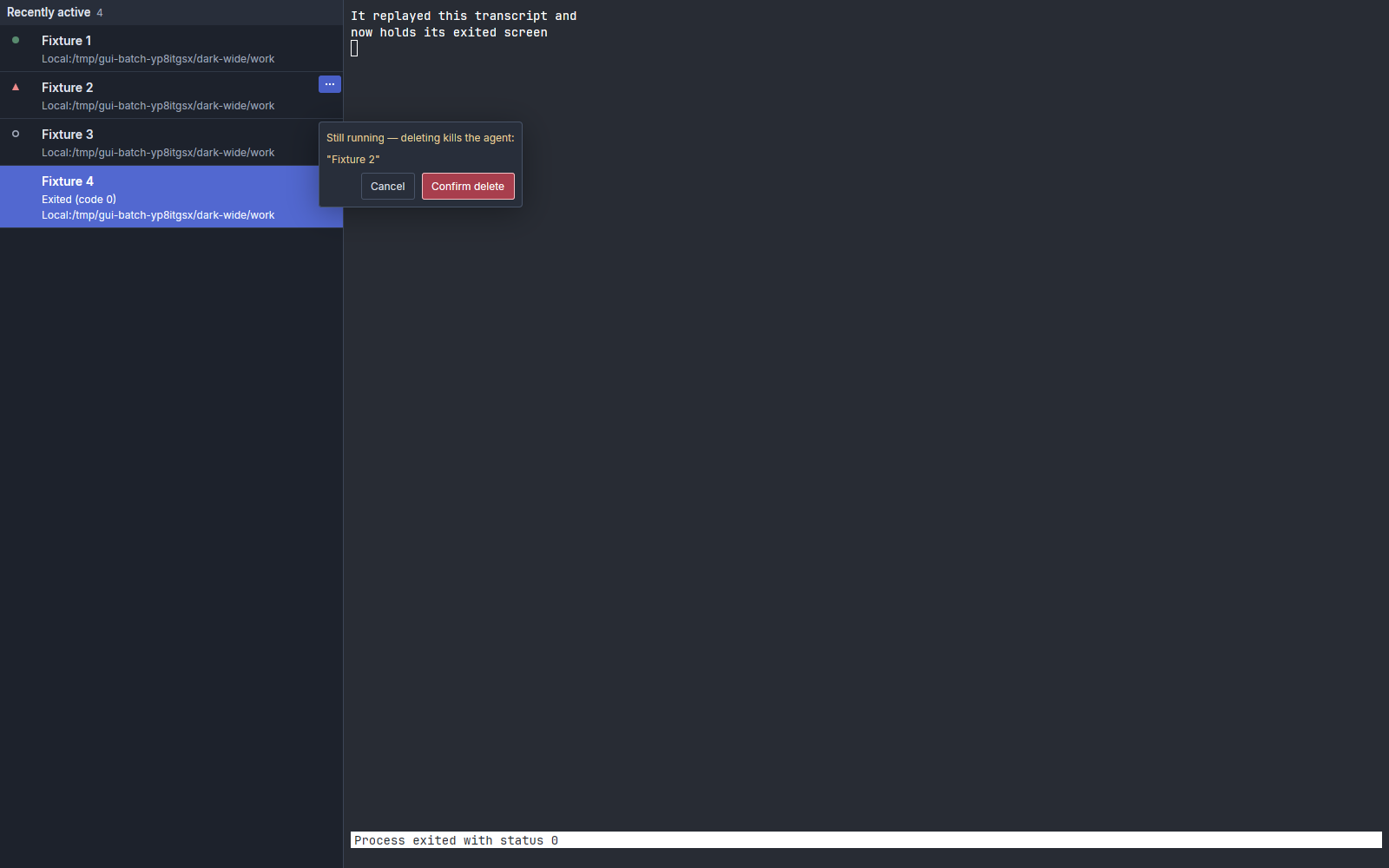
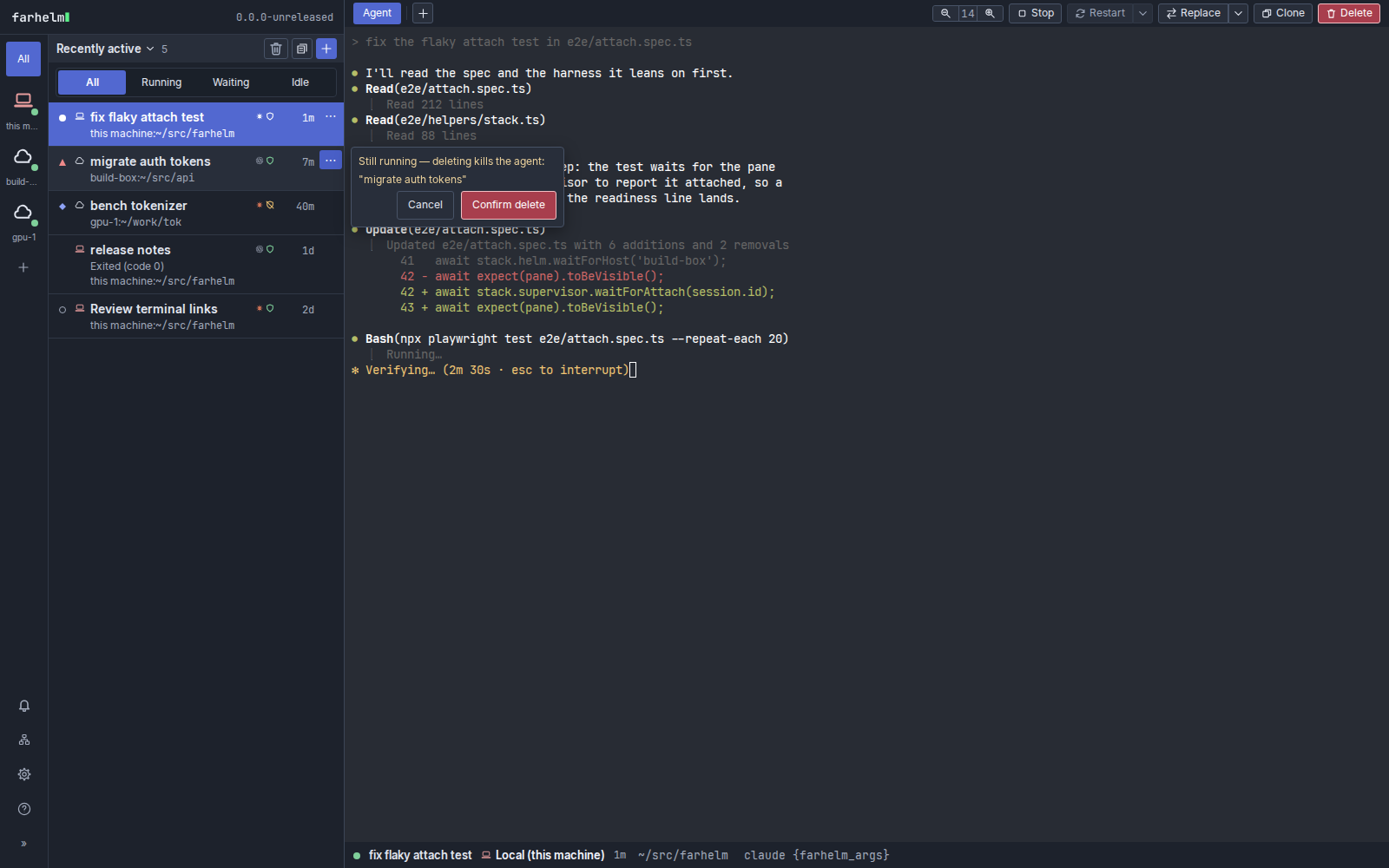
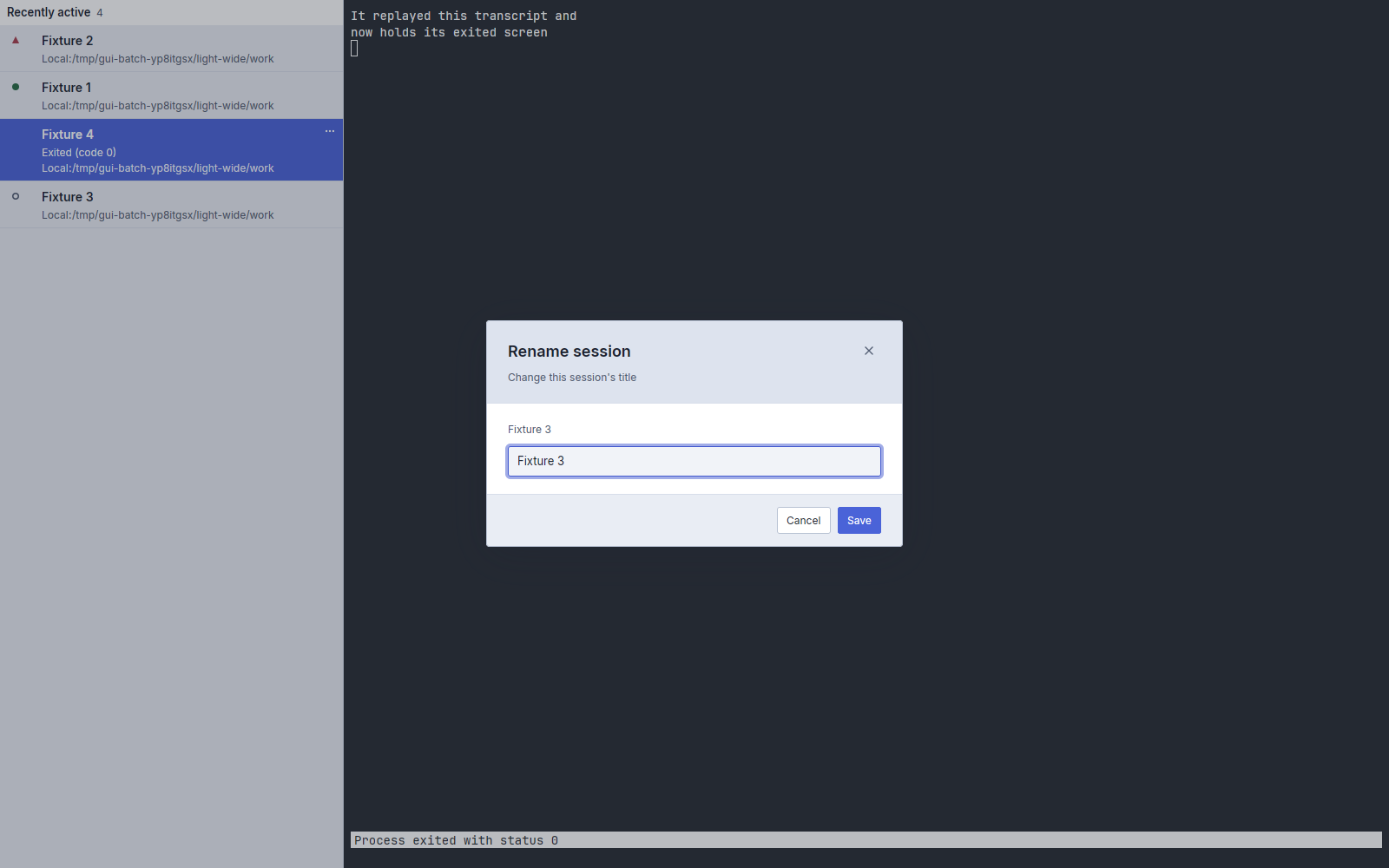
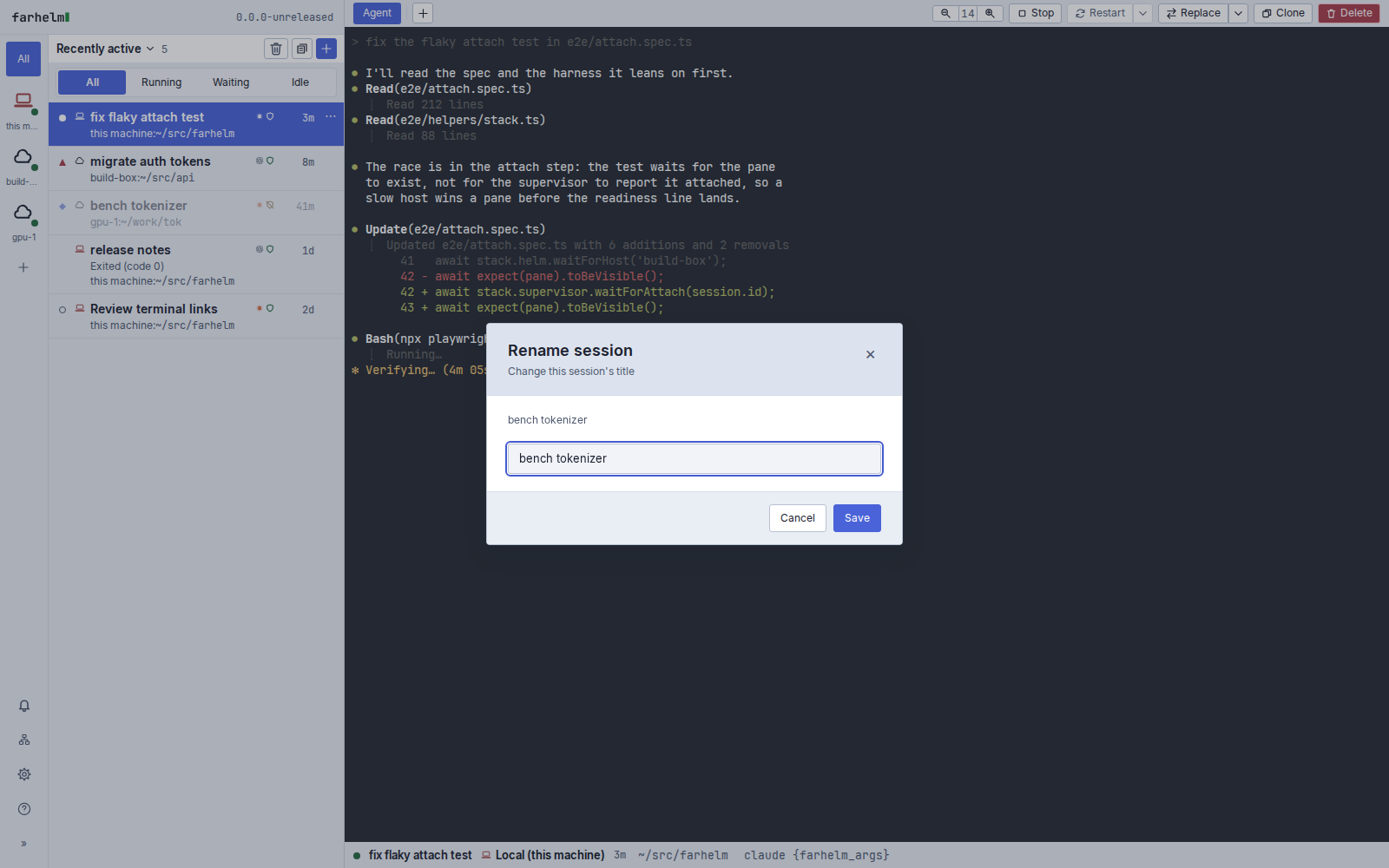
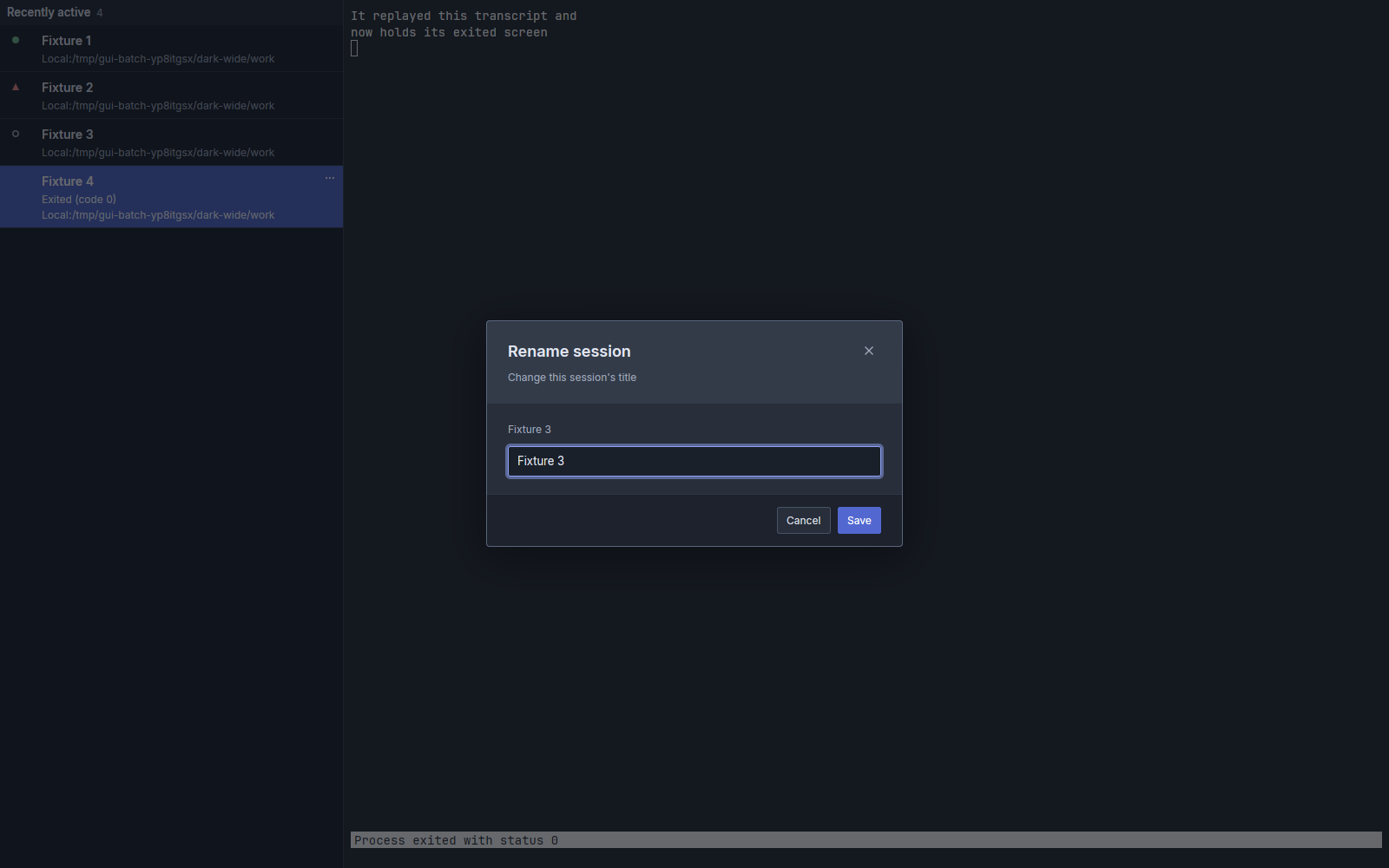
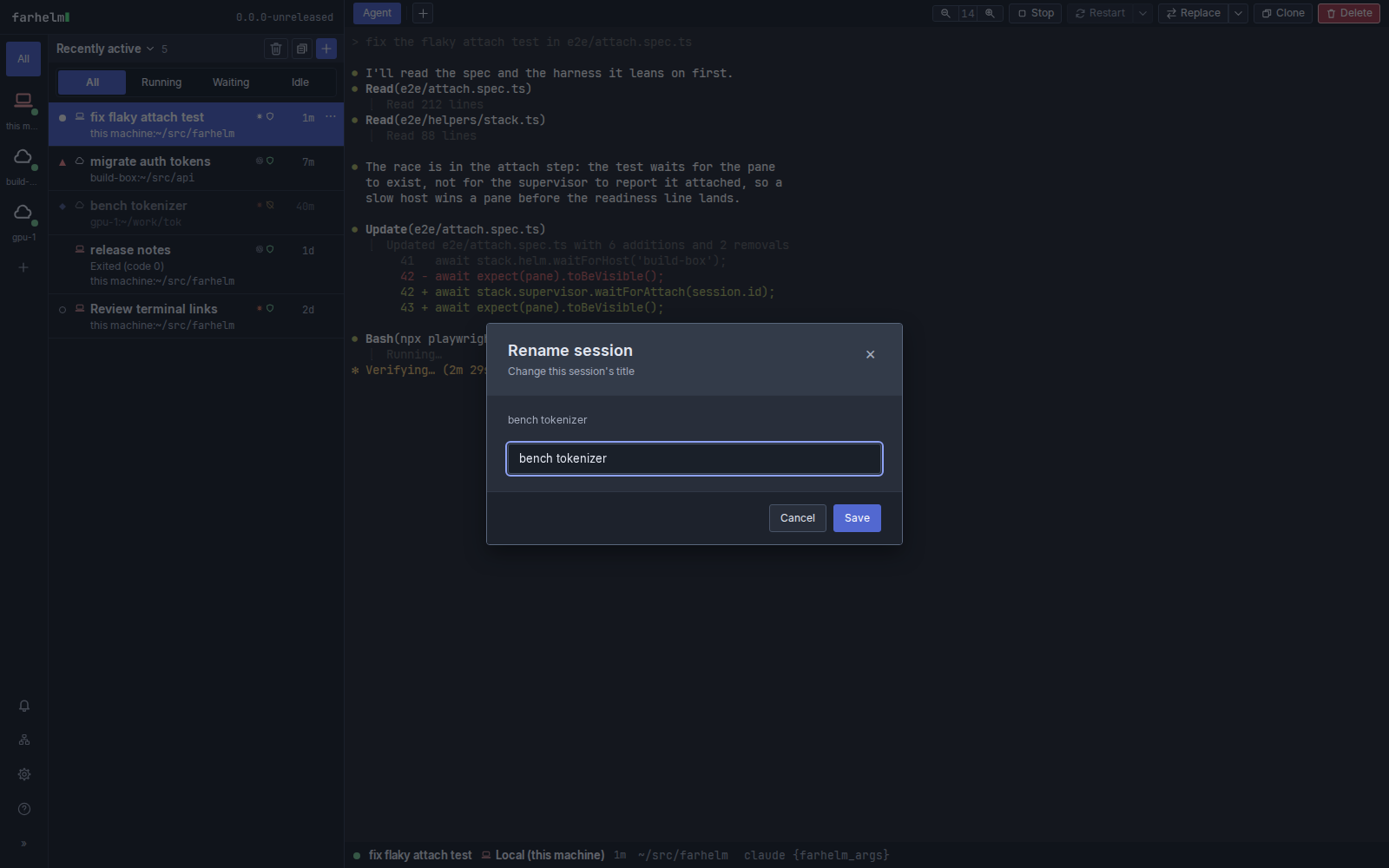
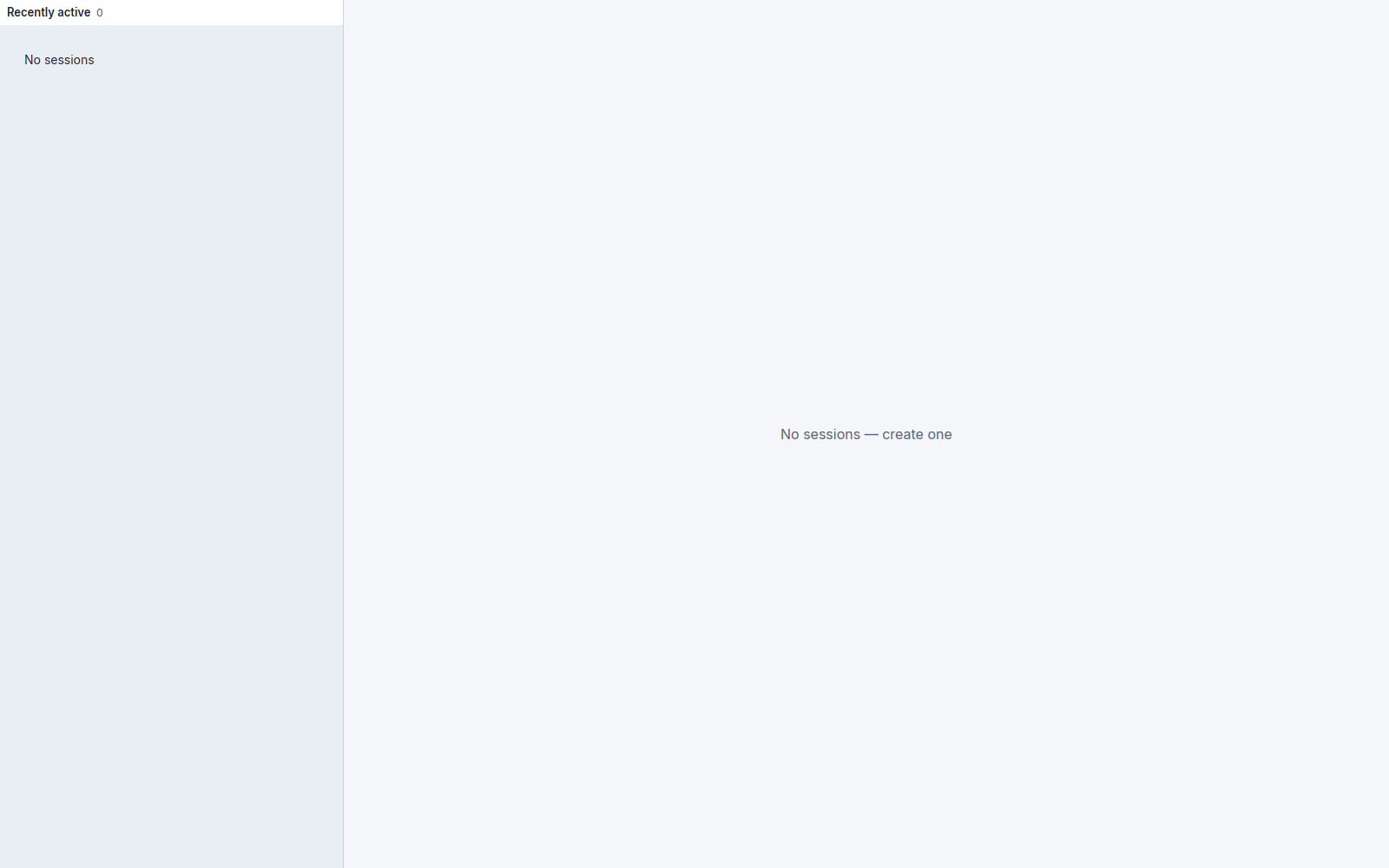
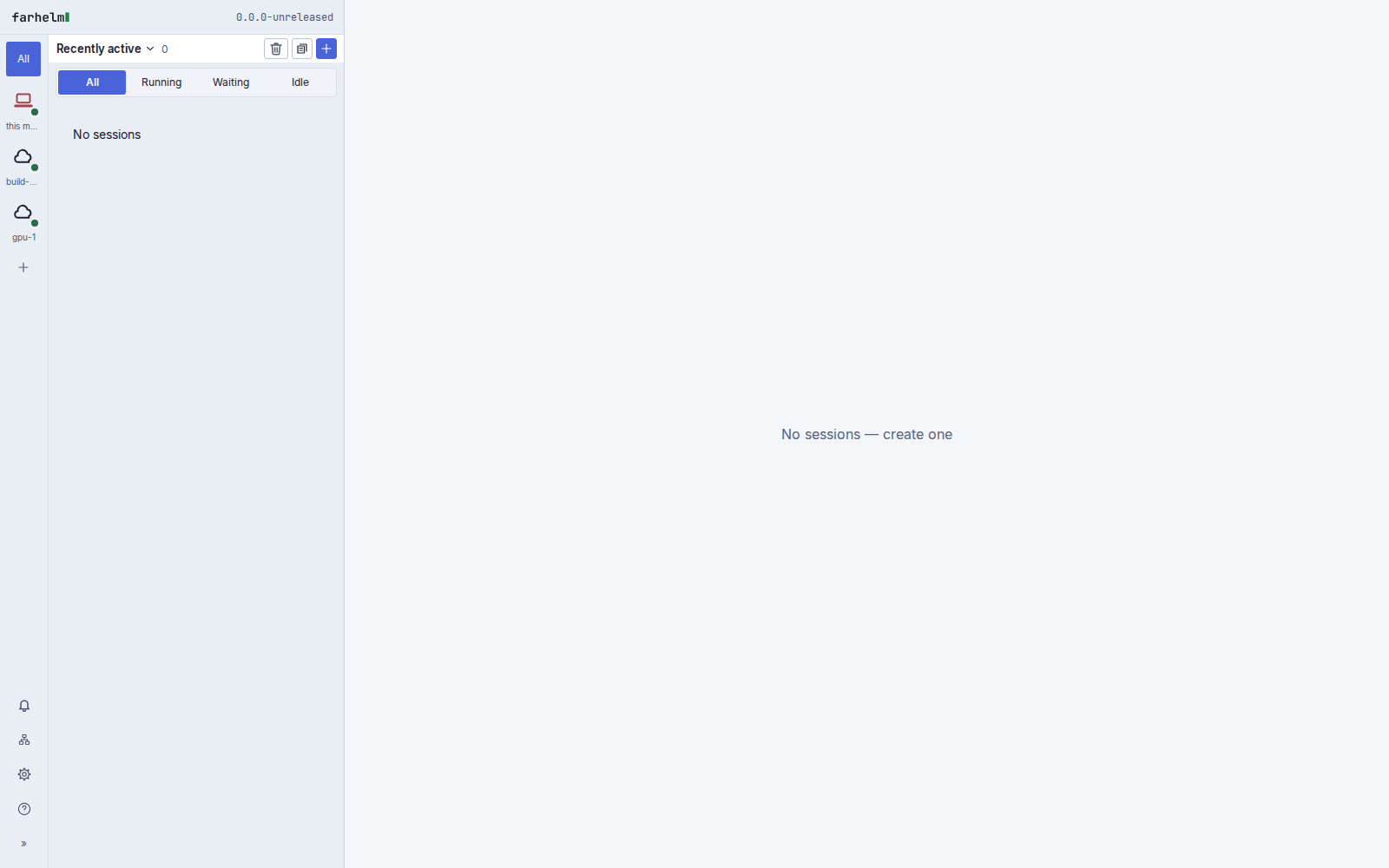
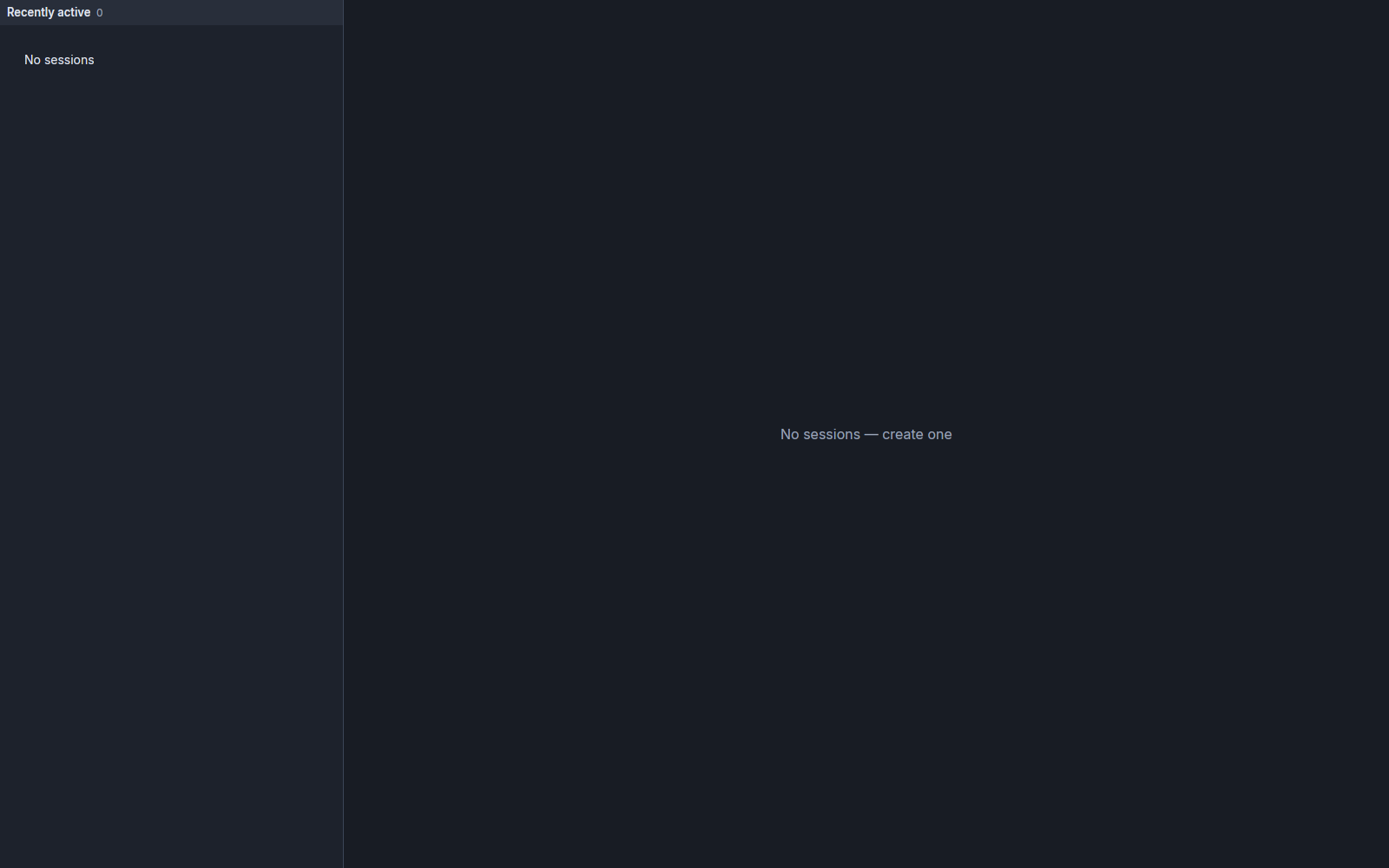
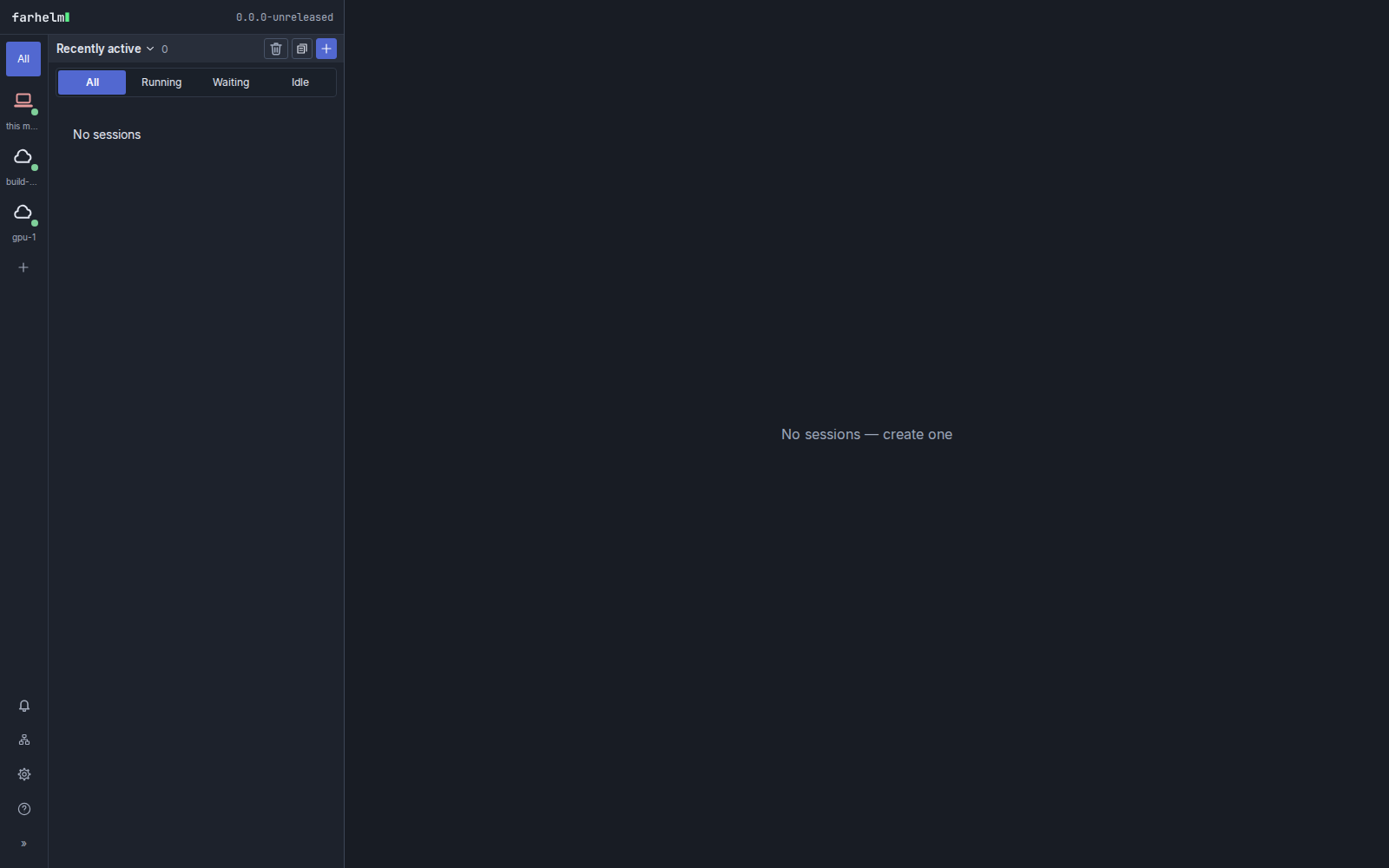
Each scene shows the new app (left) next to the old app's reference (right), light and dark, at the wide size (1600×1000). Click any image for full size. These are 34 of the batch's images: the full batch has 76 new-app captures (the 8 app scenes at two sizes and both themes, plus 22 foundation goldens) and 434 old-app reference images, kept privately.
What visibly differs today (expected: those parts are later areas' work):
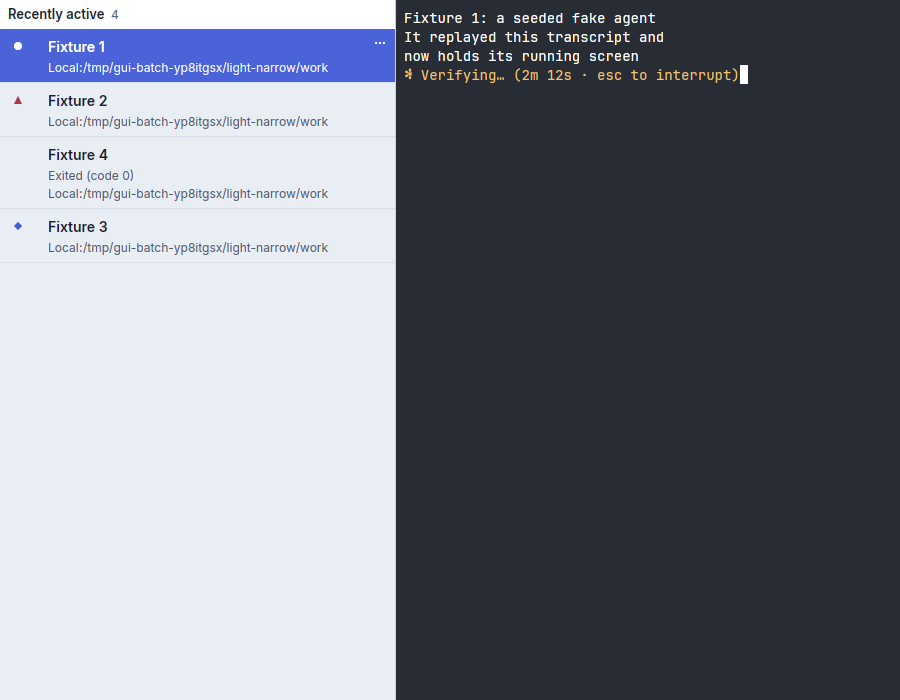
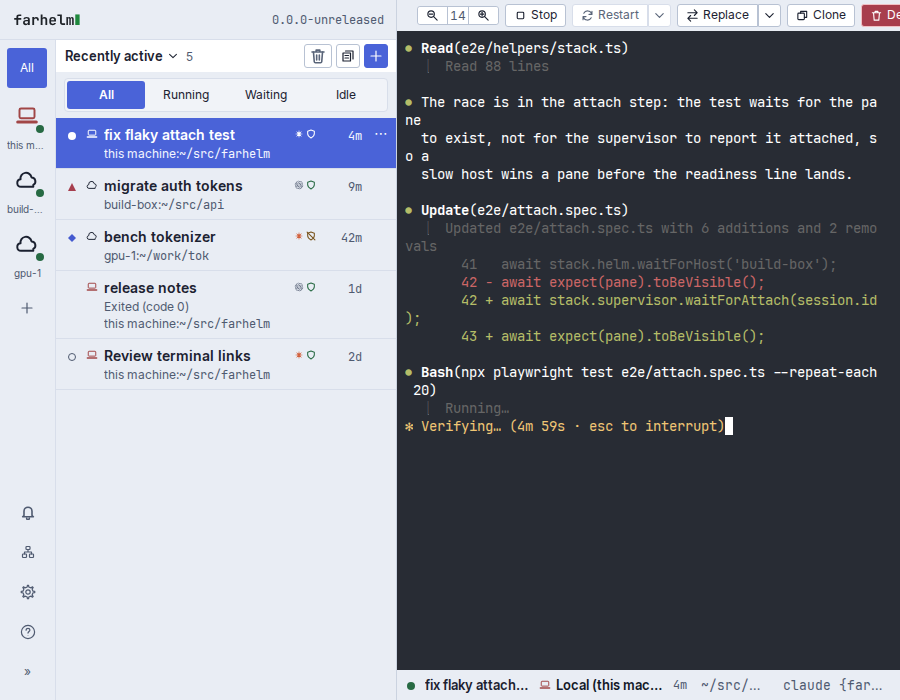
- No app header or host rail yet; the session list header shows only “Recently active” and a count, without the sort menu, buttons or All/Running/Waiting/Idle filters.
- Session rows are sparser: no harness icon, host icon, trust marks or age; the folder line reads “Local:<path>”.
- The open session has no toolbar (tabs, zoom, Stop, Restart, Replace, Clone, Delete) and no status footer; the terminal fills the pane.
- The row menu offers only Rename and Delete so far.
- Close matches: the Delete question from a row and the Rename dialog.
- Fixture differences, not app differences: the new app's demo fleet has four sessions on one host, the old one five across three hosts. The row folders show the capture run's temporary directory.
Session list, running session open
The main window over a fleet of four (running, waiting, idle, exited), the running Fixture 1 open with its terminal attached. Old app: its running session open.
Waiting session open
The waiting Fixture 2 open, its terminal showing the question it waits on.
Idle session open
The idle Fixture 3 open.
Exited session open
The exited Fixture 4 open, its terminal on its last screen.
Row menu
The idle Fixture 3's row menu, opened from its actions button.
Delete question from a row
Delete chosen from the waiting Fixture 2's row menu: the question asked beside its actions button.
Rename dialog
Rename chosen from the idle Fixture 3's row menu (after Cancel on the Delete question): the rename dialog.
Empty fleet
The main window over an empty fleet.
At the narrow size (900×700)
The first scene again at the narrow size, light theme only. The new app keeps the same split with the terminal filling what is left; the old app's terminal wraps and its toolbar runs off the right edge.
Speed (test Mac, a VM with a fixed 60 Hz display)
- Typing latency: new app 28–34 ms per key (median of runs), old app 35–37 ms.
- Idle CPU: new app about 1.0% idle, 1.4–1.7% with a running session pulsing beside a terminal; old app 1.6%.
- Terminal flood: both at about 60 frames a second frontmost.
- One measurement still running now: the session list with about 200 sessions, most of them running. If it is clearly worse than the old app, the list gets virtualized before the sidebar work grows it.
The milestone review, in short
Verdict: fix a short list before the areas start; not a rethink. Nothing goes around a foundation, no old bug class came back, and the special cases are all justified by SPEC or the platform.
What is being fixed, and who does it:
- The rule that keeps areas out of the foundations was too strict. Replayed over M1's own work, it would have refused most ordinary wiring changes (adding a screen to the main window, a new button option, a test screenshot). It now refuses only changes to the modules that carry rules (focus, overlays, questions, the channel and store, the clock); other shared files are allowed when they follow the existing pattern, and the per-change review checks that. I am landing this before any area starts.
- The end-to-end smoke test would run its tenth step second (steps sorted as text), and every area's steps would share the same three demo sessions. Fixed before areas start.
- The editing pieces the next areas need do not exist yet. Saving only works for sessions (not settings, hosts, templates or a new launch); a question can only have two answers, while SPEC's template and recipe editors ask “Keep editing / Discard / Save”; each text field's draft handling is written by hand; there is no dropdown, checkbox, radio, toggle, growing multi-line box or busy look for Save. A second, small foundations goal builds these while the terminal and sidebar areas run, so three areas do not each invent their own. It also adds the physical-key shortcut table (number keys and text size must work from a focused terminal) and splits the foundations' test files.
- The parity checklists did not match the revised area list. Split and renamed.
Kept as is: the two GPUI patches with no user yet (clipboard attachments for paste-as-upload, Linux second-launch activation) stay until a GPUI upgrade, when they are dropped rather than ported if still unused. The notice center's real shape (bell, notices panel, approval cards, chimes) is built by the approvals area in M3.
Size
- New GUI code: about 25,900 production lines (an upper bound) and 22,500 test lines; the old UI crate was 171,619 lines, so the new app is about 15% of it after the foundations, test stack and first slice.
- Foundations alone are about 9,600 production lines. Slice pieces land near their old-app equivalents (Rename: 392 lines against the old 348).
- Six lint exceptions in production, each in the one module allowed to make that call. No view caching in use.
Next
Area goals are being written now: terminal and sidebar-and-session-view first (two at once), the second foundations goal alongside them; then launcher and settings-and-hosts; then templates-and-quick-launch and desktop integration; approvals and other dialogs last (M3). You get a separate notification when they are ready to start.
Still open (nothing waits on it)
Terminal block characters at non-default text sizes. Stacked full blocks (progress bars, terminal graphs) show a faint stripe between rows at most sizes other than 14 pt, because the font's block glyph is shorter than the cell. The old app very likely did the same. Options:
- (a) draw block characters as exact cell rectangles, as most terminals do, a small deliberate improvement;
- (b) keep drawing them from the font.
Recommendation (a); default until you answer (b).